
Why Do Gray Whales Migrate to Baja Mexico?
Every winter, Eastern Pacific gray whales migrate thousands of miles from the icy Arctic to the warm lagoons of Baja California, Mexico. It’s an epic journey that has played out for generations — and one that continues to fascinate scientists, conservationists, and ocean lovers around the world.
In this post:
Unveiling the Secrets of Gray Whale Migration
Imagine being a 45-ton gray whale living along the coast of British Columbia, where life is pretty good. Food is abundant, including tons of yummy amphipods and shrimp. In fact, with your hearty appetite, you might devour up to 2500 pounds of these little critters every day. Your idea of food prep is diving down to the muddy bottom and scooping up mud and delectable treats from the seabed. Your baleen-equipped mouth efficiently separates what you want to eat from what you don’t. So why, then, do gray whales migrate to Baja, Mexico?“
Why Gray Whales Migrate: Map of the Gray Whale Migration
Why Gray Whales Migrate: The Incredible Journey from Alaska to Baja
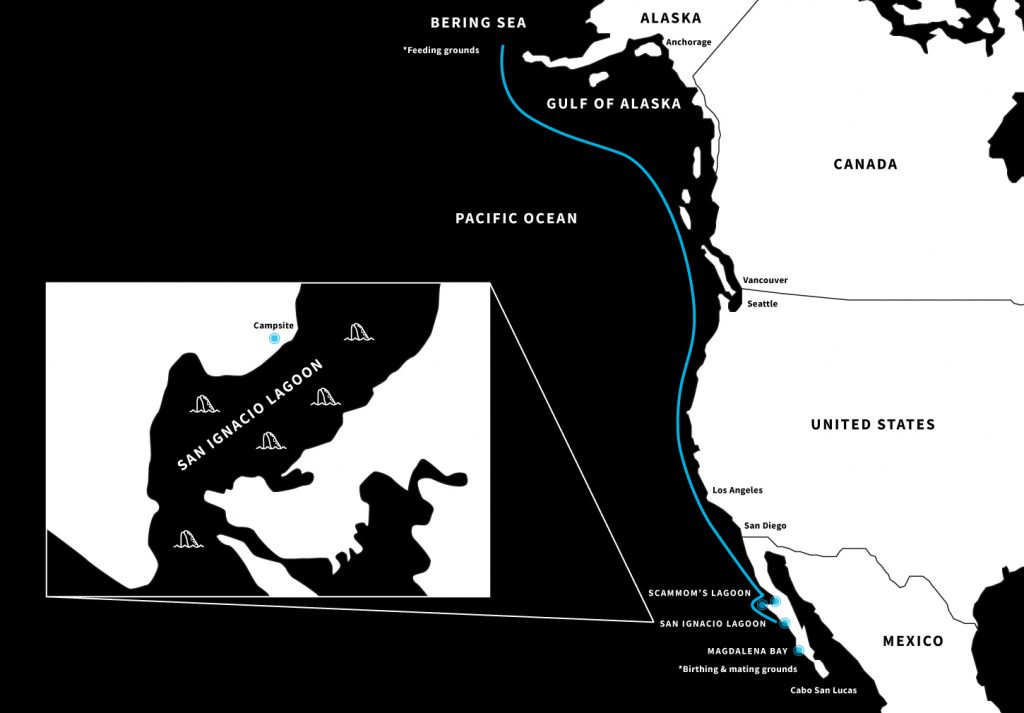
Having an annual migration route that runs the full length of North America is no joke. These gray whales travel around 10,000 miles from their summer feeding grounds in the Bering Sea to reach Baja California. Gray whales migrate by closely following the Pacific coastline, often staying within sight of land. For us, this means the west coast of Mexico, the United States, and Canada has excellent shore-based whale watching. For the whales, however, this coastal route aids navigation and avoiding predation. And their reward for this great show of endurance? Safe, calm waters where expectant mommas return to birth their calves. And, according to the whales, it’s also THE place for courtship and mating rituals.
How Scientists Study Gray Whale Migration
Scientists have been following gray whales for decades, using a combination of methods. Satellite tags attached to individuals transmit their locations, showing researchers where the whales travel, rest, and feed. Photo identification is just as important. Researchers catalog unique markings on whales, allowing them to recognize the same individuals year after year. Together, these methods provide critical insights into whale behaviour, migration patterns, and how gray whales respond to a changing ocean.
For a deeper dive into how this work is done, NOAA Fisheries offers a great overview of gray whale tagging and monitoring efforts.
When Can You See Gray Whales in Baja?
Gray whales migrate to Baja California every winter. Typically, January through April is considered the peak observation period of gray whales in Baja. However, whales start arriving as early as mid-December. Often, the first arrivals are pregnant females, who carry their calves for an impressive 12-13 months before giving birth in the safety of the lagoons.
For a more detailed guide on when and where to experience the best whale watching in Baja, check out ‘Species, Seasons, And The Best Spots.’
Why Baja California’s Lagoons Are So Special
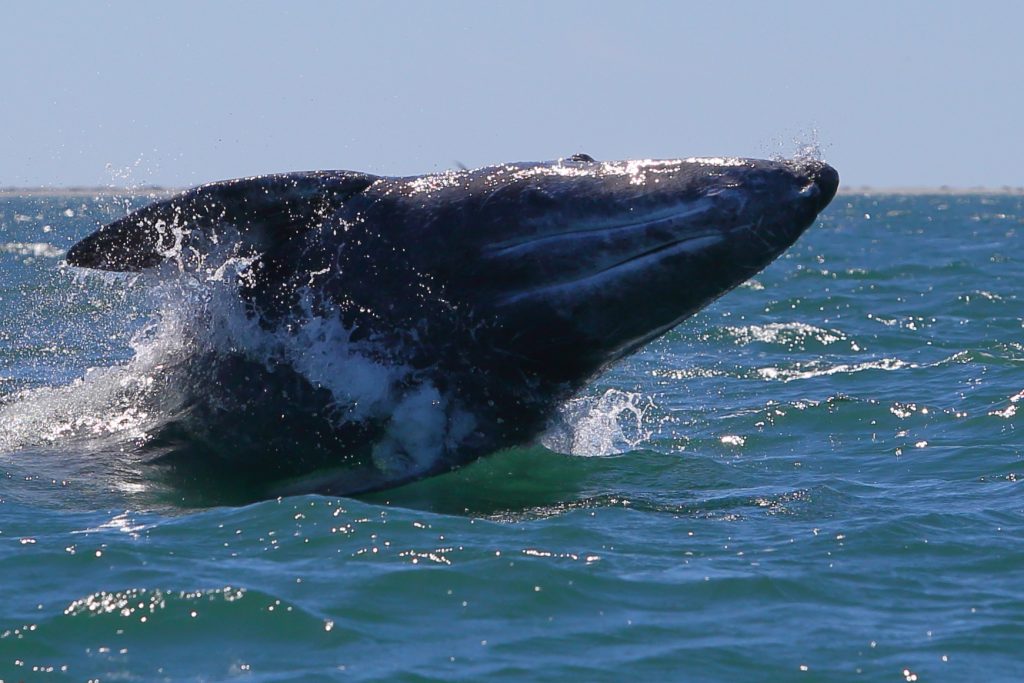
Along its west coast, Baja California is home to several remarkable lagoons, including San Ignacio, Magdalena Bay, and Ojo de Liebre. While each has its own character, they share some essential qualities: shallow, warm waters, sheltered from the crashing waves and predators of the open ocean. These lagoons serve as safe calving grounds and have been the ancestral breeding ground for gray whales for millennia.
San Ignacio Lagoon: A Natural Whale Sanctuary
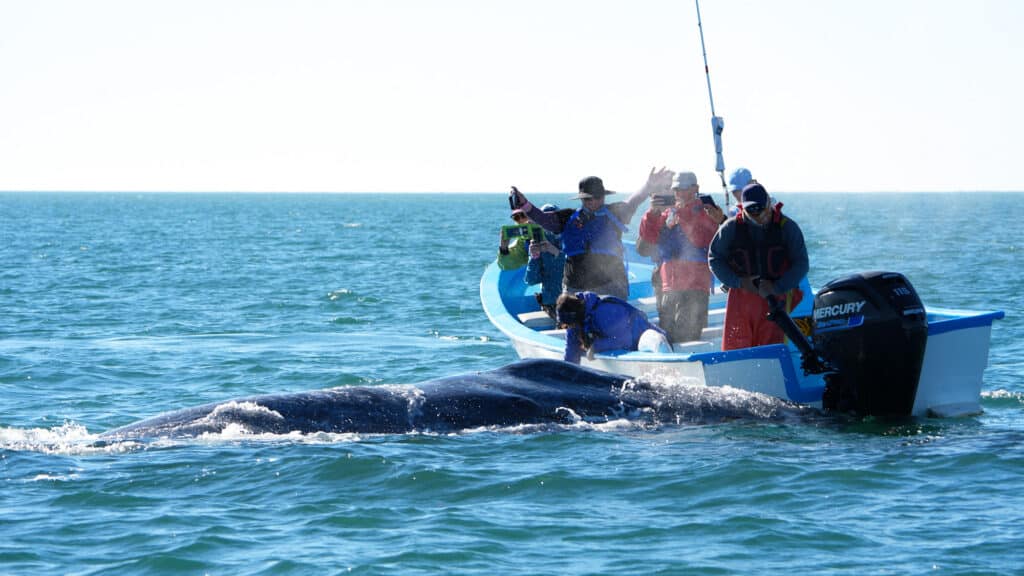
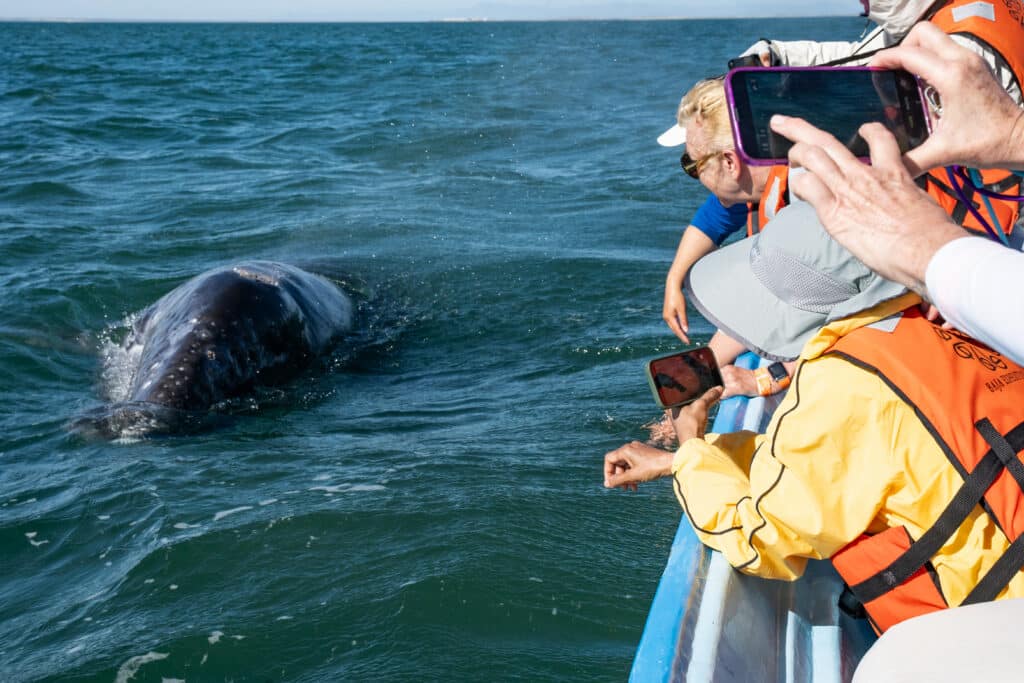
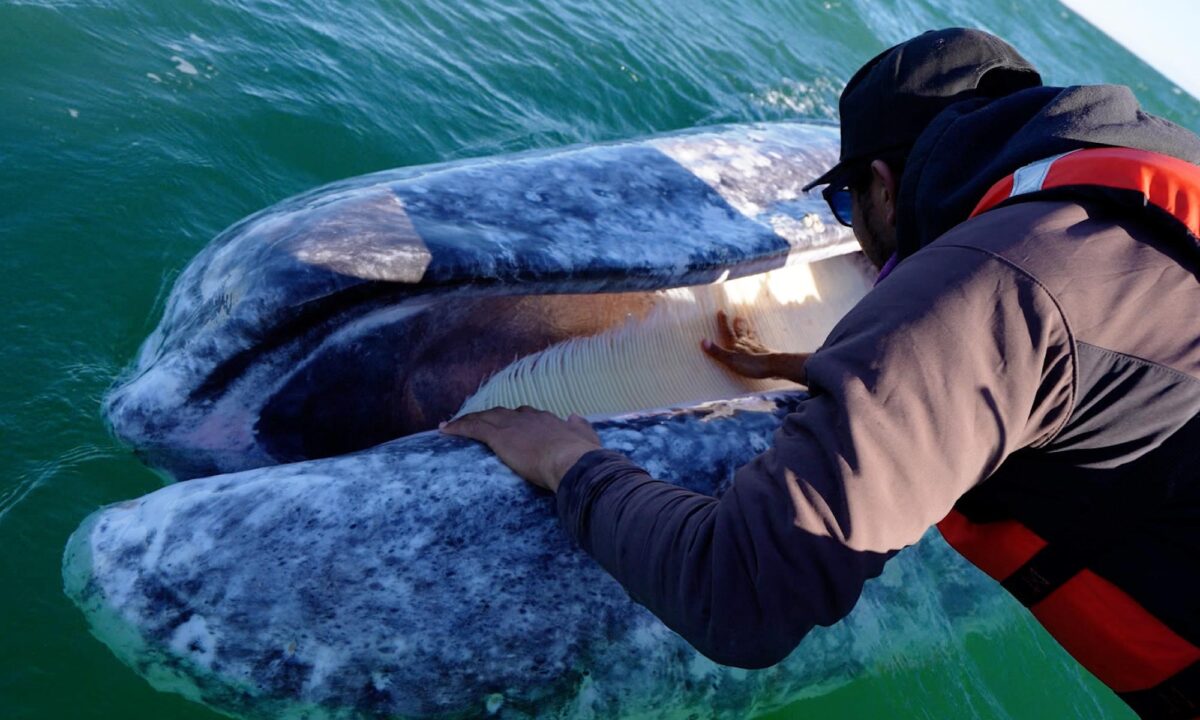
Protected within the El Vizcaíno Biosphere Reserve, San Ignacio Lagoon is one of the last intact breeding and calving habitats for gray whales on Earth. Its strict protections and the long-standing conservation commitment of the local community have helped foster an extraordinary relationship, where whales often choose to approach boats, creating encounters found nowhere else in the world. What truly makes San Ignacio Lagoon unique is the rare moments when whales allow people to touch them. These interactions, especially touching gray whales, always happen on their terms. No chasing and no baiting. Just a quiet (respectful) connection with nature.
San Ignacio Lagoon: Safety from Predators
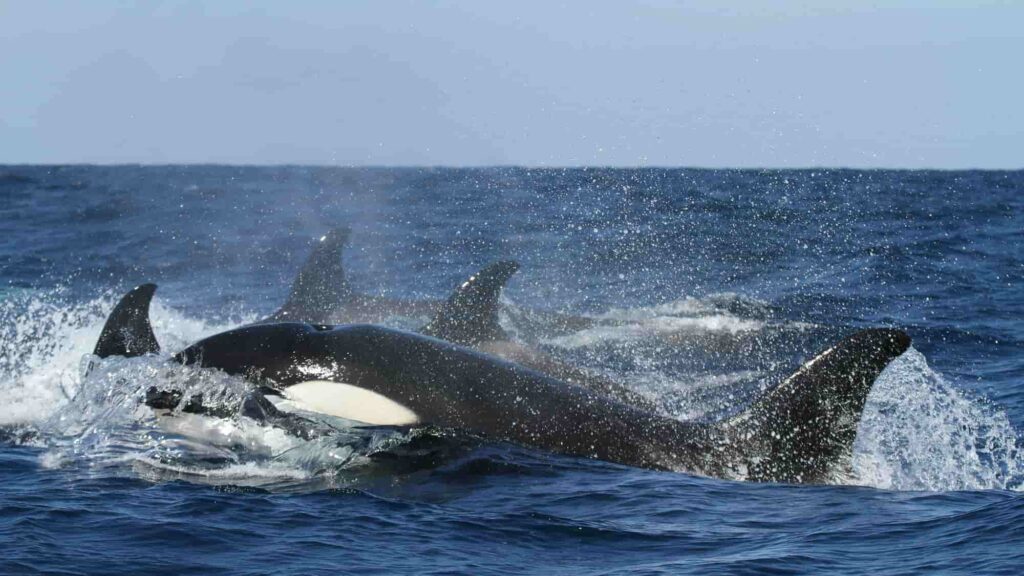
Orcas are almost never seen in San Ignacio Lagoon. The last report was in February 2022; some orcas entered the lagoon, causing concern. They took at least one dolphin (remains were found), but that was the first time they had been reported in the lagoon in 17 years. The orcas face a high-risk, high-reward situation. The entrance to the lagoon is tricky, with constantly shifting shallow sandbars. Gray whales are comfortable in the shallows, even when it’s wavy or there’s a swell. In contrast, orcas are cautious about getting grounded in shallow water, potentially leading to their demise.
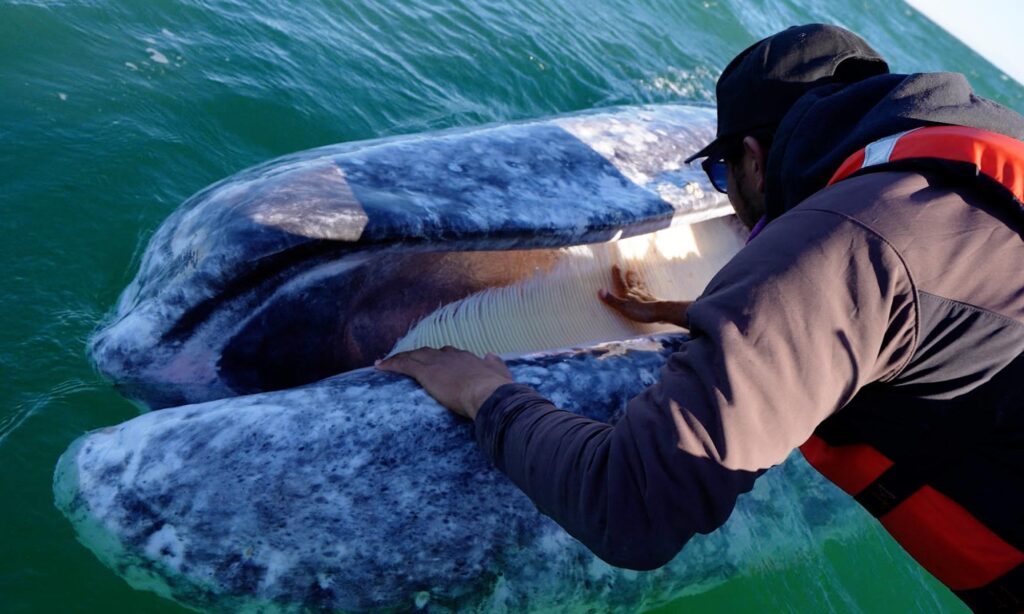
So now, imagine you’re a pregnant momma whale facing an intriguing dilemma. Why would you leave this idyllic place, where everything you need for survival is at your fin tips, to embark on an epic migration down the coast? A long journey that involves fasting, all while you carry your precious calf within. The caloric requirements for such a migration are immense, as you must swim thousands of miles and have enough fat reserves to nurse your calf. Not just for their first few months of life in the lagoon, but momma gray whales also nurse their calves all the way back up the coast, for a total nursing period of 7 months or longer!”
Calving and Nursing in Warm Shallow Waters
Many gray whale mothers give birth and nurse their calves in the sheltered, shallow waters of Baja’s lagoons. These warm, calm conditions protect newborns from open-ocean predators and reduce heat loss, allowing calves to conserve energy and grow rapidly during their first weeks of life. The lagoons also give mother whales time to rest and bond with their young before beginning the long migration north. Fueled by milk that is an astonishing 53% fat, calves can more than double their birth weight in just a matter of weeks, often gaining 50–80 pounds per day during their early months in the lagoon. These protected nursery habitats are essential to gray whale survival, helping ensure the strength of the next generation.
The Return Journey: Why This Migration Matters
As winter fades, gray whales begin their long journey north, leaving Baja’s sheltered lagoons between February and April. Mothers and calves hug the coastline as they travel, moving steadily toward the rich feeding grounds of the Arctic. For newborn calves, this is one of the most demanding migrations undertaken by any mammal on Earth.
The journey is not without risk. Along the way, whales face threats from predators, storms, ship traffic, and the increasing pressures of a changing ocean. Despite the dangers, gray whales must migrate — connecting the warm nurseries of Baja with the cold, food-rich Arctic seas that sustain gray whales for the rest of the year. Each successful migration ensures not only the survival of individual whales, but the continuation of one of the planet’s great natural rhythms.
by Captain Mike, boat captain and life-long ocean enthusiast
Frequently Asked Questions (FAQs)

🎥 YouTube: ‘San Ignacio Lagoon: This is the story of the Whale’s House.’