

Ocean Safari: Diving, Snorkeling, Kayaking – Beautiful Isla San José
Sea of Cortez diving & glamping: Isla San José
Isla San José is one of the largest and wildest islands in the Sea of Cortez — home to living reefs and a tremendous variety of marine life, including dolphins, sea turtles, rays, sharks, and whales. It’s far enough from La Paz that its best reefs and close-by dive sites are usually reserved for liveaboard trips only. Now, glamping puts this remote paradise within reach.
This adventure blends scuba diving and ocean safaris depending on what the marine life is doing. Our 48-ft fast boat, with open-air dive deck and direct water access, is perfect for both. Naturalist-led ocean safaris bring the thrill of cruising on the lookout for dolphins, whales, orcas, and other pelagic giants.
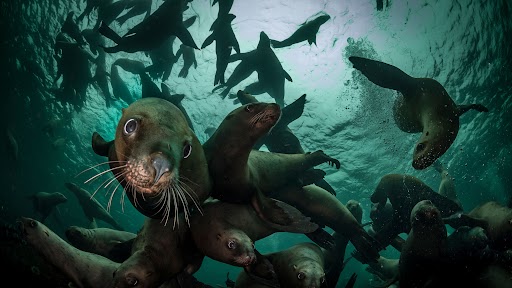
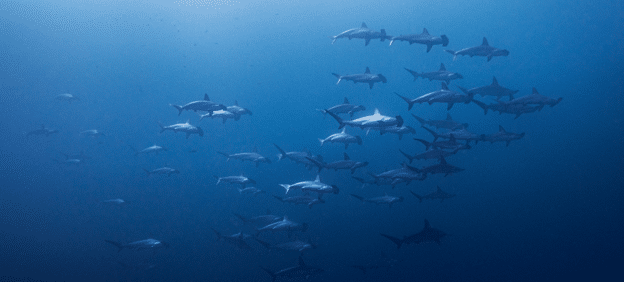
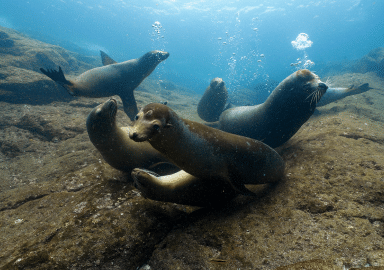
Las Ánimas is the crown jewel of fall diving, and just a short run from camp — a playground of pristine dive sites, each with its own character. The north pinnacles offer dramatic landscapes and prime hammerhead territory. Inside the bay, Guadalupe fur seals and sea lions come out to play, making it a favorite with snorkelers, who find the fur seals incredibly curious and playful right at the surface. To the southwest, the pinnacles drop into a huge wall, a magnet for turtles and big schooling fish.
We also venture to Isla Espíritu Santo, a UNESCO World Heritage Site, for standout dives like El Bajo — seamounts famous for shark sightings, including hammerheads and silky sharks, at the peak of their fall season — and Los Islotes, which has just reopened after its summer breeding closure, with sea lion pups at their most adorable and playful.
Camp sits right on San José’s east shore: a zero-footprint glamping base with real beds, private en-suite bathrooms, and gourmet meals served beachside, with tasty cocktails from the bartender to ease into the evening. A dedicated masseuse and massage tent are also on hand, offering massages for maximum relaxation.
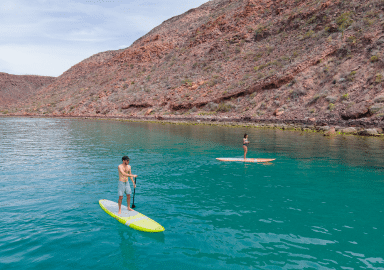
For added comfort, a 50-ft-plus mothership anchored just offshore provides hot showers, a chef, Starlink, and 24-hour power. Kayaks and paddleboards are ready for exploring the coastline.
Ocean Safari: Diving, Snorkeling, Kayaking – Beautiful Isla San José
Whales, hammerheads & vibrant reefs of the Sea of Cortez
Ocean Safari Wildlife
Dolphins show up on nearly every safari, often in mega-pods. Whales are always a possibility out here — pilot whales, sperm whales, finbacks, and false killer whales roam the Gulf year-round, and with luck, November brings the season’s first humpback sightings. Fingers crossed for orcas — the Sea of Cortez is one of the best places to see them, though they’re travelers who can cover 100 km a day, so bring your good-luck charms.
Scuba Diving
Las Animas – volcanic reefs, rocky pinnacles, and dramatic seamounts, where, with luck, schooling hammerheads pass through from June to November. The walls and reefs are home to big schools of fish, moray eels, rays, turtles, tuna, and exceptional macro life. In the shallows, playful California sea lions and the rarer Guadalupe fur seal share the boulder gardens.
El Bajo — a series of three seamounts that rise from deep water, creating a natural gathering point for pelagic sharks like schooling hammerheads and silky sharks. The site is also home to vibrant schools of rainbow wrasse and jacks, and impressive colonies of green Panamic moray eels, alongside tuna, marlin, and octopus.
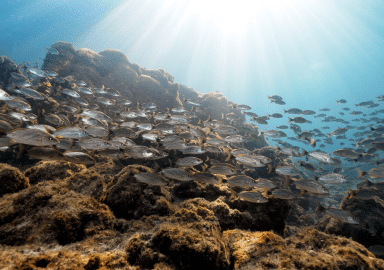
Los Islotes reopens September 1 after the summer breeding closure, and in fall the pups are still tiny and ridiculously cute — there’s even a secret crevice locals call the “puppy palace,” full of tiny pups. Baitballs of sardines sparkle in the sun, with sea lions passing through and pelicans and cormorants hunting overhead. The reefs are rich in macro life, such as gobies and nudibranchs, alongside angelfish, surgeonfish, parrotfish, and snappers.
Swanee Reef brings sea lions and big schools of fish, while wreck dives like Fang Ming deliver the regular reef inhabitants — baitfish, groupers, snappers — as well as regular turtle sightings.
Can we guarantee marine life sightings?
Honestly? No — and with decades of experience in these waters, we’d never pretend otherwise. What we can do is put you in the right place at the right time, with guides and captains who know these waters inside out. We note animal movements, follow the conditions, and make smart calls in real time. The rest is up to nature. No feeding schedules, no glass panels, no guarantees. These are wild animals in a wild ocean.
Respectful marine life encounters
Expert naturalist guides lead all wildlife experiences and operate in full compliance with Mexican marine wildlife regulations — ensuring every encounter is safe, respectful, and deeply memorable.
Science and conservation airplane
From January to November, our marine biologists conduct observation flights over the Sea of Cortez and Magdalena Bay to support science and conservation efforts, and to better understand and appreciate this remarkable region we work in. We operate multiple flights every week, each including several low passes over all of our boats and camps in the area.
Possible wildlife sightings:
- Huge swirling schools of fish
- Nudibranchs, blennies, seahorses
- Hammerhead sharks
- Moray eels, turtles, octopuses
- Mega pods of dolphins
- First humpback whales (from November)
- California sea lions
- Migratory and resident birds
- Fingers crossed for whale sharks, orcas, pilot whales, finback whales, sperm whales
Combine ocean safaris, scuba diving & island downtime
The best of both worlds: guided ocean safaris and snorkeling or scuba diving pristine sites, all depending on what the marine life is doing. Our 48-ft fast boat, with open-air dive deck and direct water access, handles both seamlessly.
Fall delivers peak scuba diving and snorkeling conditions: warm water, fantastic visibility, and calm seas, ideal for underwater photography, with shallow sites, great light, and subjects ranging from big animals to the tiniest macro life. Keen divers can log three or four dives a day, typically two in the morning and more in the afternoon, plus night dives right off the beach, with the rotation always set by conditions.
The island is yours to explore: kayak along the sea-carved coastline, paddleboard in calm bays, or put on your walking shoes for a naturalist-led hike among huge cacti to learn about the local flora and fauna. Prefer to relax? Stretch out on the beach with a good book, or mix and match and follow whatever daily rhythm suits you.
In the evening, unwind with marine life presentations from our naturalists, book a relaxing massage, or simply take in the sunset with a freshly prepared mojito in hand, before settling in under a star-filled sky.
Highlights include:
- Scuba diving
- Paddleboarding
- Ocean safaris
- Nature walks
- Snorkeling & freediving
- Marine life presentations
- Kayaking
- Massages (one complimentary in-water massage per guest; extra massages available for a fee)
La Paz hotel stay and glamping on Isla San José
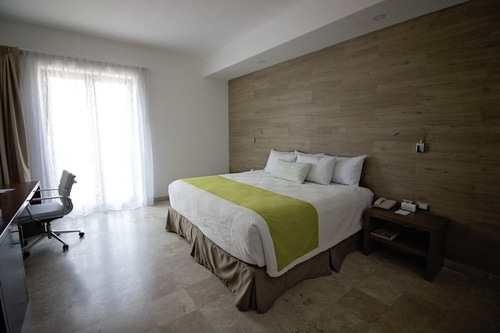
Modern elegance in the heart of La Paz
Your La Paz base is either the H-Blue Hotel or the Hotel Catedral, both well-positioned properties just steps from the Malecón, La Paz’s iconic waterfront promenade. Both modern hotels come with rooftop pools and bars offering sweeping views over the city, along with comfortable, well-equipped rooms, private bathrooms, and complimentary Wi-Fi throughout.
Glamping on San José Island in the Sea of Cortez
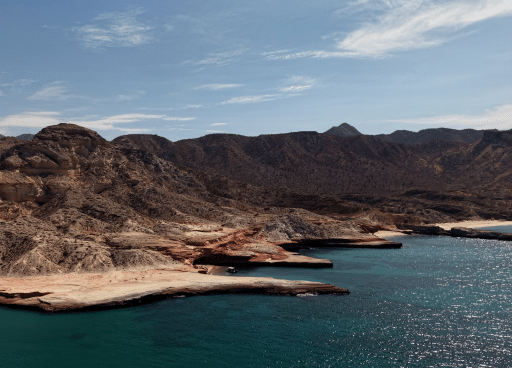
Isla San José feels completely untouched by time — no roads, no crowds, just cactus-dotted desert, mountains, cliffs, white-sand beaches, and one of the richest marine environments on Earth, right at your doorstep.
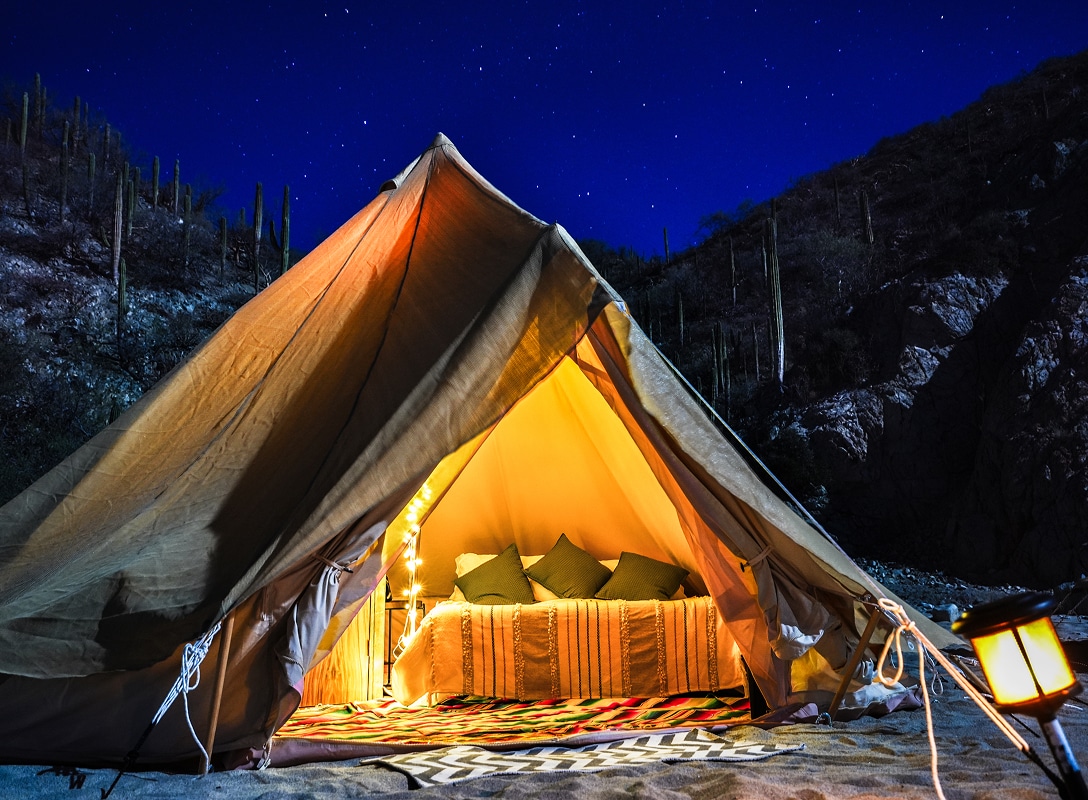
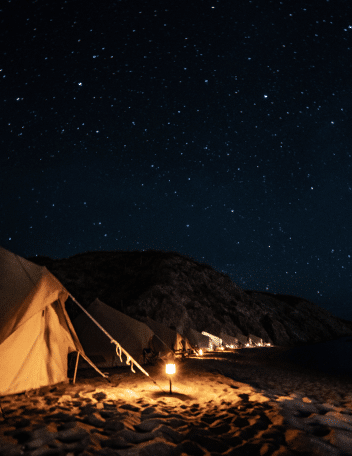
Our zero-footprint camp sits right on the shore — designed to leave no trace while giving you every comfort. A large open-air awning provides a shaded social space for the group: the place where sunset drinks turn into dinner, and dinner turns into stargazing. The night skies out here are a spectacle in themselves.
And when you need a hot shower or air conditioning, our fully equipped 50-ft-plus mothership is anchored just offshore, a short RHIB ride away, with hot and cold running water on board. For a daily rinse, camp-style showers are available right on site.
The camp operates as a temporary, low-impact installation. Generators are not permitted on the island — lighting and charging stations are solar-powered. CPAPs can be accommodated in camp with advance notice.

Each spacious tent is specially engineered for the Baja climate: flow-through ventilation, double-reflecting fly shade, and battery-powered swamp coolers keep the interior a full 15–20°F cooler than outside. Inside, fine linens, a real bed (queen or twin configuration), and a private en-suite camp bathroom with toilet and freshwater basin. No air mattresses. No compromises. Kayaks, paddleboards, and snorkelling equipment are included and ready whenever you are. And when the day winds down, treat yourself to a massage in our dedicated massage tent. The mothership provides hot showers, air conditioning, a well-provisioned galley, watermaker, Starlink internet, and 24-hour power — everything you need, never far away.
Explore the Glamping Camp- 4 nights accommodation (1 night at Hotel Catedral or equivalent & 3 nights glamping)
- Scheduled group transfers
- All core activities
- Snorkeling equipment
- Scuba diving (equipment rental not included; up to 15 dives, weather and schedule dependent), including tanks, air fills, weights, and safety gear (Nautilus LifeLine, DiveAlert, SMB)
- One complimentary in-water massage per guest
- All meals and snacks
- Non-alcoholic drinks
- Full expedition crew: naturalist guides, boat captains, camp manager, hosts, chef, bartender, and masseuse
- 50-ft-plus mothership support providing: hot showers; 24-hour power and air conditioning; galley with fresh provisions; watermaker; Starlink internet (additional fee)
- Alcoholic beverages and bar
- Scuba gear rental
- Mandatory personal medical and dive insurance including evacuation coverage
- Internet access
- Additional massages and other optional add-ons
- Crew gratuities
- Port fee (US$ 35 pp payable in cash onboard)
Isla San José glamping expedition – what awaits you
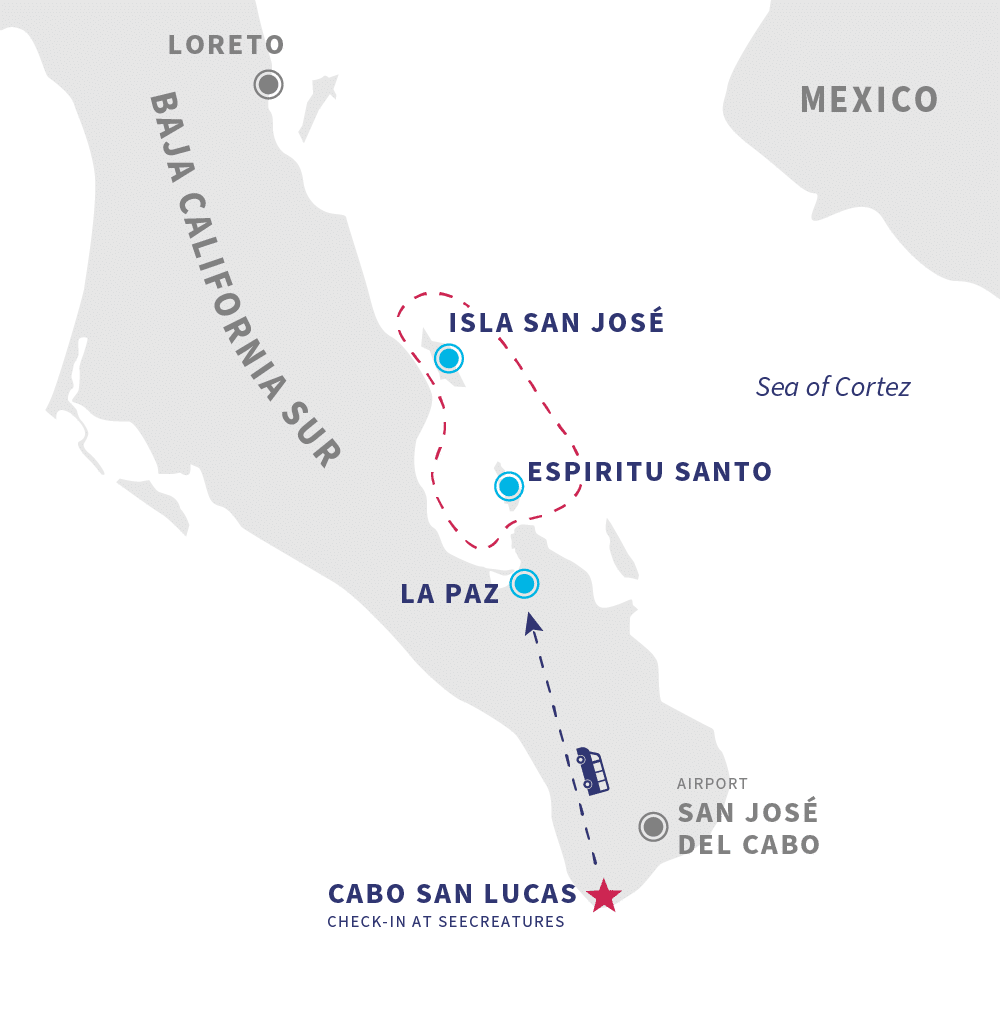
Fly into either Los Cabos (SJD) or La Paz (LAP). Guests arriving in Los Cabos meet at SeeCreatures Cabo for a complimentary transfer to La Paz. If you’re flying into La Paz directly, we can either pick you up from your hotel or you can meet us directly at Baja Expeditions HQ in La Paz.
Your adventure begins with welcome drinks, meeting your naturalist and fellow adventurers, and dinner, followed by an overnight stay at Hotel Catedral (or equivalent), where we’ll run through the days ahead and all the activities to come.
Depart the hotel at 7:00 AM and board your 48-ft fast boat for breakfast underway — and keep your eyes on the horizon: the run north is a true ocean safari, with dolphins, sea lions, and the chance of whales along the way. We stop at Espiritu Santo for our divers, snorkelers, and kayakers — at sites such as Swanee Reef and the wreck of the Salvatierra — before a late-afternoon arrival at camp on Isla San Jose, where your hosts are waiting on the beach with cold drinks and big smiles. Cocktail hour, dinner on the beach, and an evening presentation by our naturalists — then stargazing under the Mexican sky, or jump back in the water for an evening snorkel or night dive.
Two morning dives at Las Animas — seldom-visited, always excellent, some of the very best diving in the Sea of Cortez, and just a short run from camp. Kayakers may choose to stay behind and explore San Jose’s incredible landscape instead. Back to camp for lunch, then an open afternoon: more diving for the keen, or snorkeling, kayaking, paddleboarding, a hike, a massage, or rest on the beach. Bartender-prepared drinks at the beach bar, then dinner and an evening presentation under the stars.
A full day on the water based from camp. Morning dives at Las Animas or a nearby site, with the afternoon open for more diving — keen divers can log three or four dives today — or island activities, plus the chance of another night dive off camp. Evening back at the beach bar.
We break camp after breakfast and dive our way back south toward La Paz, with stops at the pinnacles off Isla San Francisco and — weather permitting — El Bajo, the legendary hammerhead seamount at the peak of its fall season. We arrive into La Paz around 5:00 PM, with a complimentary onward transfer to SeeCreatures Cabo, or we can assist with booking a La Paz hotel and arranging more amazing Baja activities.
If you have more time in Baja, continue the journey. Extend your stay with SeeCreatures Cabo — scuba courses, local 2-tank dives in Cabo San Lucas, and diving Cabo Pulmo and Gordo Banks.
Ocean Safari: Diving, Snorkeling, Kayaking – Beautiful Isla San José
All prices are in US dollars
Getting Here

What airport do I fly into?
Your airport options:
Los Cabos International Airport (San José del Cabo Airport – SJD) is well connected with flights from 15 US cities, most of Mexico, and some direct overseas routes. It’s just a 45-minute drive from SeeCreatures Cabo, our sister company in downtown Cabo San Lucas, where you can check in before the complimentary transfer to La Paz (approximately 2 hour 30 minute drive) to start your adventure.
La Paz International Airport (LAP) has direct flights from Los Angeles, plus a handful of domestic hubs. Flying to LAP is the most direct route into La Paz if you’d rather skip the Cabo transfer. It’s about a 20-minute drive from our Baja Expeditions HQ, where you can check in before the complimentary transfer to start your adventure.
How do I get from the airport to town?
Our concierge team can help arrange transfers or recommend reliable local companies. Note that Uber is not permitted to pick up at SJD.
When should I fly in?
We recommend flying in at least one day early, as a buffer against flight delays or lost luggage. It also leaves time for a pre-trip dive at Cabo San Lucas, Cabo Pulmo, or Gordo Banks, or any other pre-trip adventures around Baja. That said, it’s totally feasible to fly in on the start date of your trip if you prefer.
Trip Basics
What is the minimum age for this trip?
12 years old. Please note that all under-18s need to be accompanied by a parent or guardian.
Can I join if I don't scuba dive?
Yes. This camp is truly multi-activity: snorkelers, freedivers, kayakers, and paddleboarders are very welcome. Much of the wildlife, the sea lions especially, is wonderful from the shallows — and fall brings excellent visibility, light winds, and super-warm water, making it prime time for paddling and exploring.
If I'd like to scuba dive during this trip, what certification do I need?
All experience levels are welcome, but the minimum requirement is Open Water Diver certification with good buoyancy control.
Will I need to show my dive certification card?
Yes, you’ll need to show proof of certification, either a physical card or a digital one.
Can I get certified or take a course before the trip?
Yes, our sister company SeeCreatures in Cabo San Lucas offers a full range of dive courses. Please reach out to us for more information and special pricing for our guests.
Ocean Safaris and Diving
What to expect during the diving and ocean safaris?
The Sea of Cortez is big, so the diving is wild and conditions-led. We pick sites by weather and what the ocean is doing, and our dive guides and captains make the call on each dive. Some days deliver sea lions, schooling fish, and big water in a single morning — and whales, orcas, or hammerheads can turn up on any crossing. Other days are quieter. That’s the nature of wild ocean — no feeding schedules, no guarantees, just real encounters when they happen.
How much time will I spend in the water?
Most of your day will be spent in and around the Sea of Cortez — scuba diving, snorkeling, freediving, kayaking, paddleboarding, and exploring the reefs and marine life. Each outing is flexible; you can participate as much or as little as you like.
How many dives can I do?
Across four days on the water, keen divers can typically log three or four dives a day — two each morning, plus optional afternoon dives and a couple of night dives right off camp. As always in the wild Sea of Cortez, the exact rotation is set by conditions.
What are the conditions like?
Fall brings fantastic conditions. Water temperatures run roughly high 70s to low 80s°F (25–28°C), with up to 100 ft (30 m) visibility.
Is Nitrox available?
No, Nitrox is not available on this trip.
Camp Life
Can you accommodate dietary restrictions?
Yes, with at least 30 days advance notice — vegetarian, vegan, lactose-free, gluten-free, low-sugar, and quasi-kosher/quasi-halal can be accommodated. More unusual requests may not be possible.
Can I charge my phone, laptop, and other devices?
Charging in camp is solar-powered, since generators aren’t permitted on the island due to biosphere reserve regulations. For 24-hour power and standard household electrical outlets, head to the mothership, anchored just offshore, where you can charge phones, laptops, e-readers, and cameras. CPAPs can be accommodated in camp with advance notice. Our vessels use standard North American outlets (110V AC), so if you’re coming from outside the US, bring a travel adapter. For everyone’s safety, unattended charging of lithium-ion batteries is only allowed in designated areas.
Is there internet access?
Starlink internet is available for an additional fee for the whole trip. It runs on a satellite connection, so it’s great for staying in touch — emails and apps like WhatsApp work well — but not for streaming sites like Netflix or YouTube. Best to pre-download any movies or shows before you travel.
Can I shower every day?
Yes, unlimited hot showers are available on our mothership, anchored just offshore, a short boat ride away. In camp, showers are shared, camp-style setups with more limited water, so we ask everyone to be mindful of water usage.
Will there be mosquitoes or bugs?
We schedule these trips for late October and November on purpose, the window after the summer rains, when steady fall breezes keep biting insects to a minimum. Insect repellent is still a good idea, and it’s also wise to keep an eye out for other critters we share this remote, unspoiled island with.
What to Bring
What should I pack?
Sunglasses, a hat, and summer wear well suited for a relaxing time at sea and on the beach — plus a sweater or fleece for the evenings. Reef-safe sunscreen, linen, towels, soap, and shampoo are all included with your trip. The sun can be strong out on the water, with reflection off the surface adding to it, so good sun protection is well worth packing.
What wetsuit do I need?
A 3 mm wetsuit is usually more than enough. If you get cold easily, we recommend packing a hooded vest for extra layering.
What snorkeling equipment do I need?
A mask, snorkel, wetsuit/hood, and fins — freediving fins are ideal, but regular fins work fine. Snorkeling equipment rental is included, but you’re also welcome to bring your own, since familiar gear tends to be the comfiest in the water. Please note that kids’ sizes are limited, so we ask for at least 30 days’ notice on children’s wetsuits to make sure we have the right size ready for you.
What dive equipment do I need?
The usual full scuba gear — regulator, BCD, dive computer, mask, wetsuit, booties, and fins — which you can bring yourself or rent from SeeCreatures.
What safety gear is provided?
Nautilus LifeLines, DiveAlerts, and SMB safety sausages are loaned free to all guests.
Insurance & Documents
Do I need a passport or visa?
All guests traveling from abroad must have a passport valid six months from entry. All non-Mexican guests will need an FMM, Mexico’s entry permit. Visas are required from certain countries, please check your specific requirements online.
Is insurance required?
Yes. We require all guests to have medical and evacuation insurance. Divers are required to have divers’ insurance. We highly recommend DiveAssure for all your needs, diving or nondiving.
In addition, we highly recommend the purchase of trip insurance interruption insurance from DiveAssure (some other providers have provided insufficient coverage to previous clients). This gives you peace of mind and financial security in case of named weather events, cancelled flights, medical issues whether your own or other guests, lost bags and much more. If you decline coverage, please note that we do not issue credits or refunds for anything that is beyond our immediate control.
Health & Safety
Will I get seasick?
The Sea of Cortez is generally very calm. A scopolamine patch is recommended for anyone prone to seasickness.
Where's the nearest decompression chamber?
The closest hyperbaric chambers are located in La Paz and Cabo San Lucas.
What if there's an emergency?
All crew are first-aid trained, and several are first responders. Camp is stocked with an AED, emergency oxygen, and an extensive first-aid kit. A contracted medical officer is reachable through our satellite communication system, and if medical evacuation is needed, it’s arranged by boat transfer to shore or, where available, aerial medevac.
Our pre trip information package covers everything from boarding instructions to what to pack and general trip details. Please review it carefully for the most up to date information about your upcoming adventure.
Related Trips
Ocean Safari: Whales, Mobulas, Orcas and more!


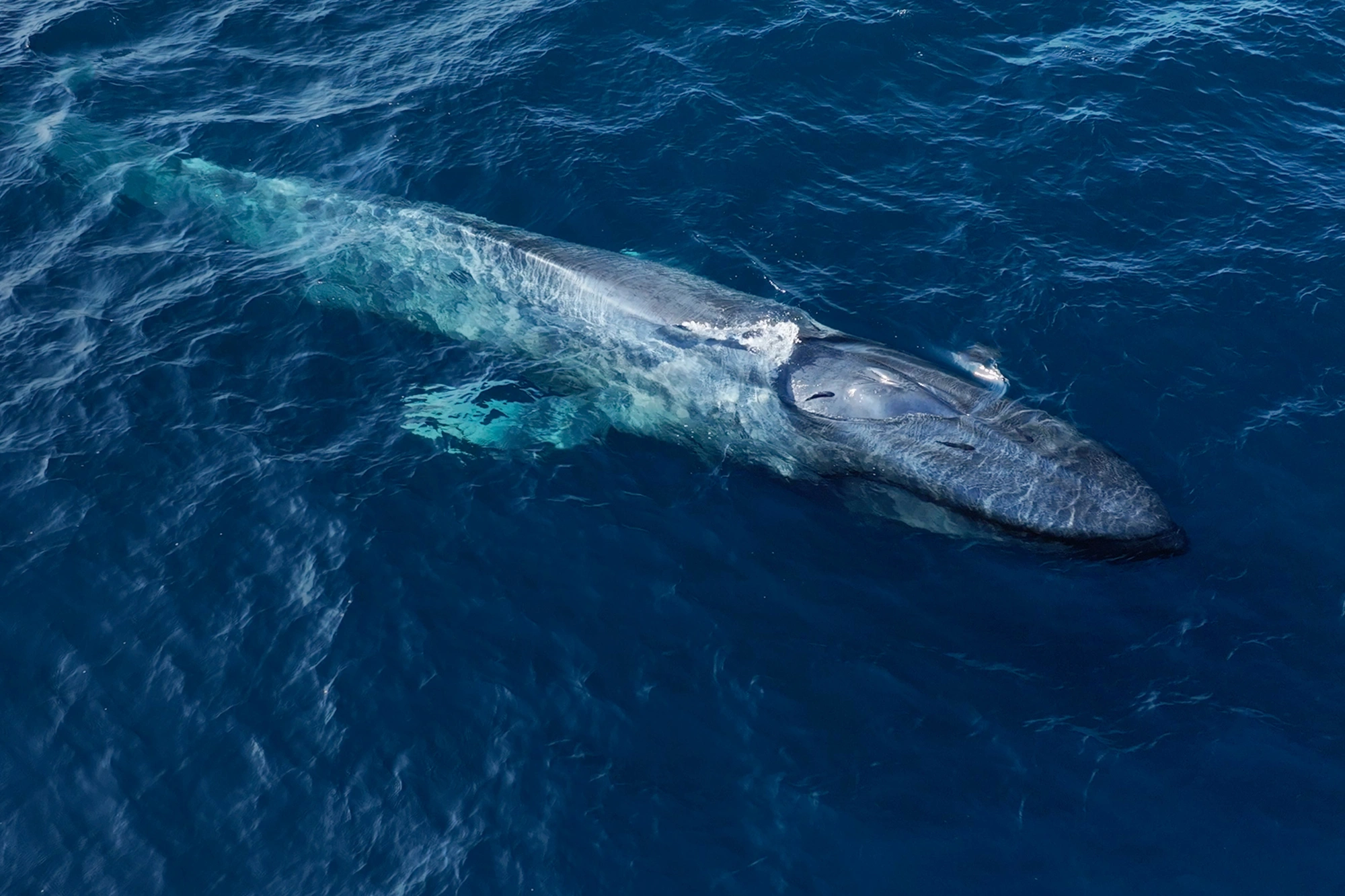
Ocean Safari & Island Glamping in the Blue Whale Hotspot
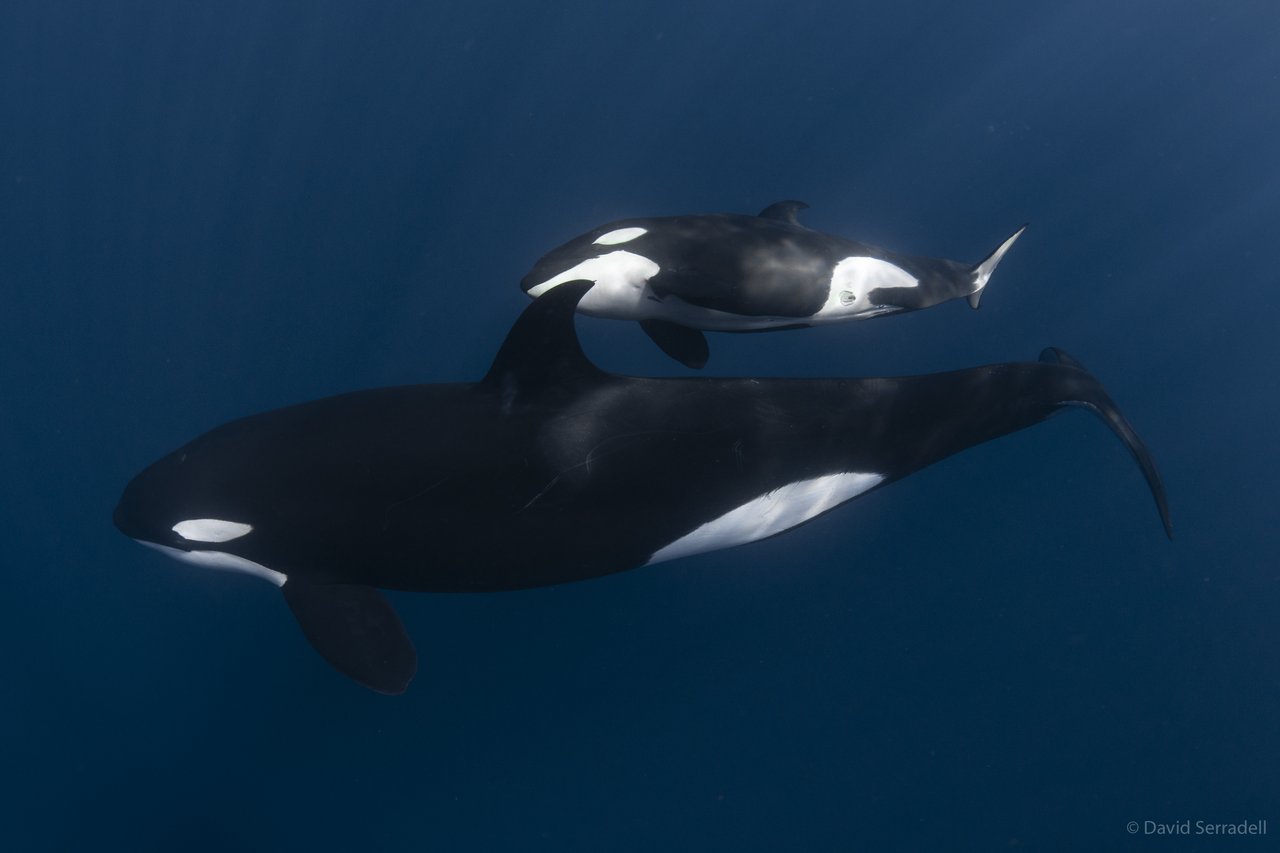
Ocean Safari & Glamping on Jacques Cousteau (Cerralvo) Island
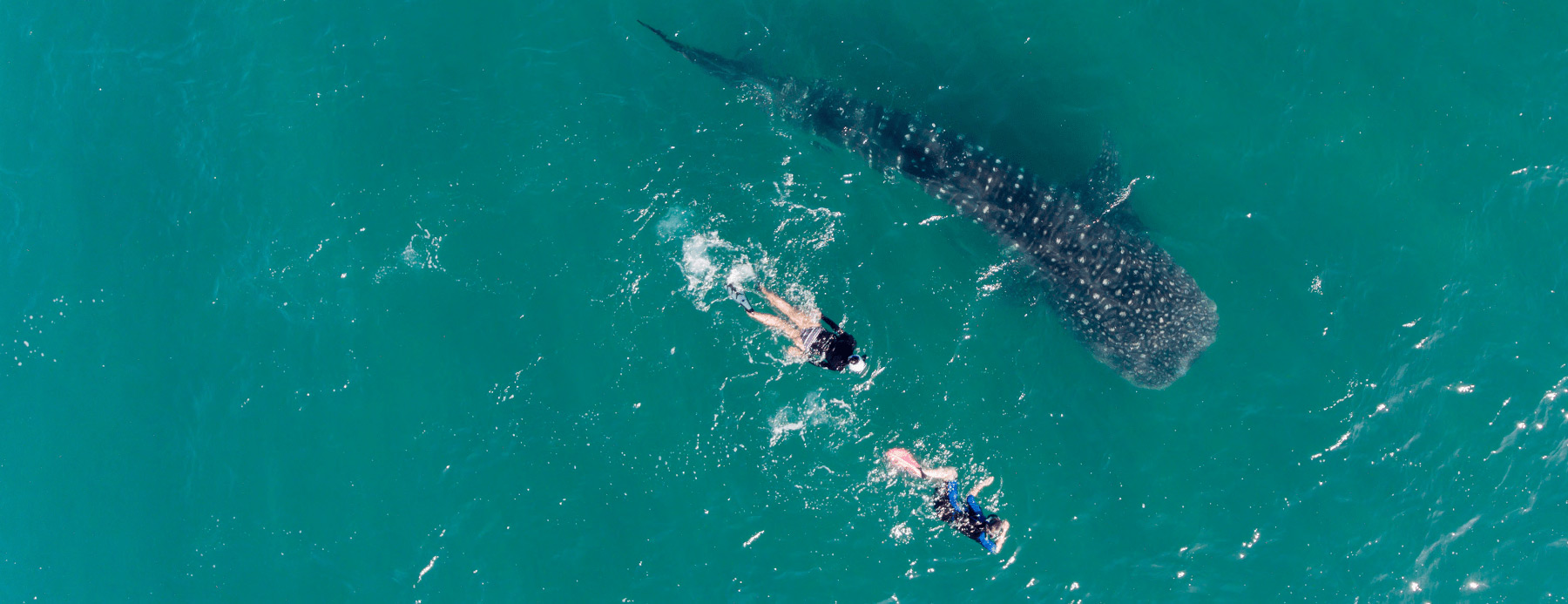
Ultimate Whale Sharks in the Sea of Cortez
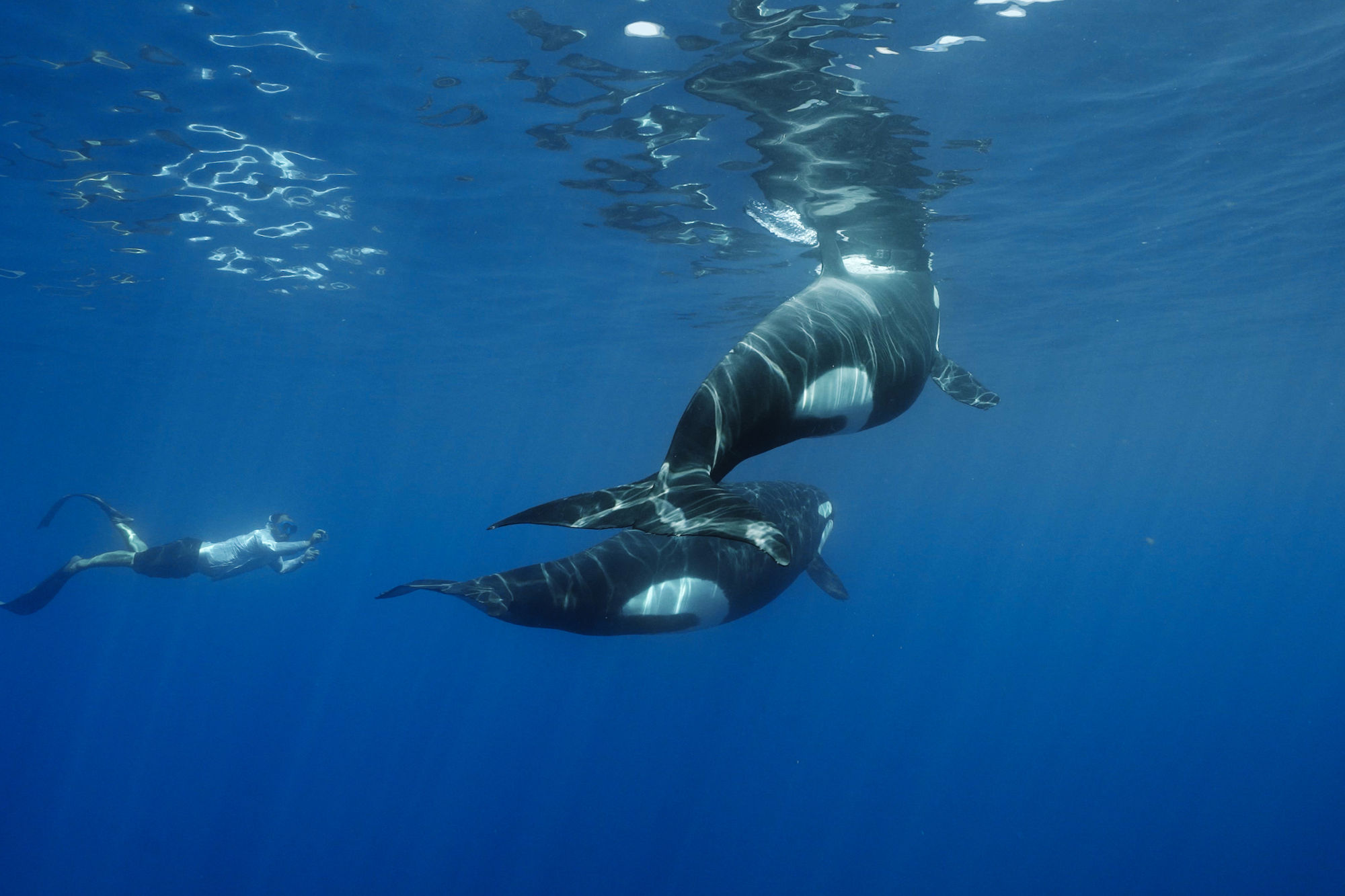
Combo: Whales, Mobulas, Orcas + Ultimate Whale Sharks