






Whale Watching San Ignacio Lagoon: Where the Gray Whales Call the Shots
2025-06-02
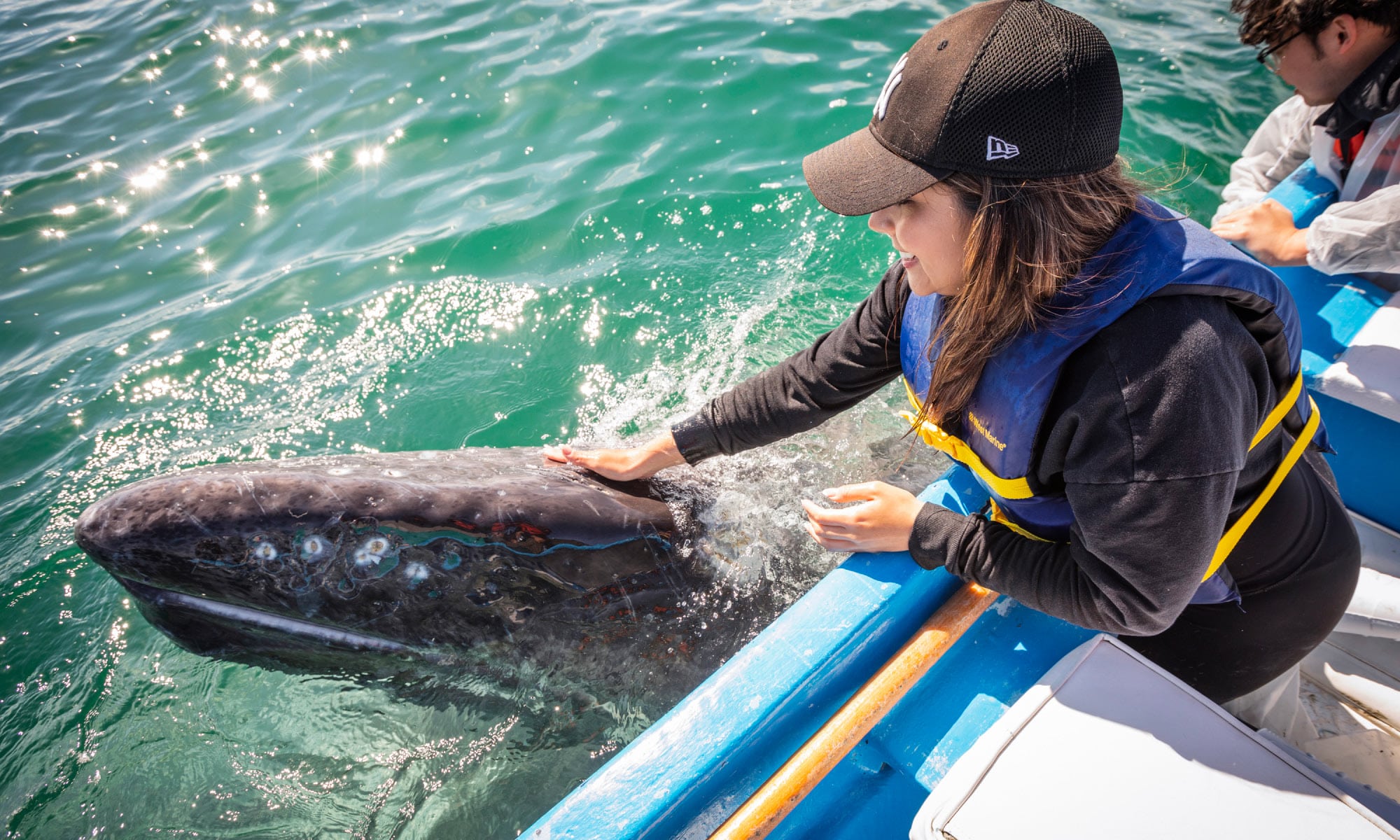
Here, gray whales approach boats with a friendly curiosity like no other. They come up to you, lift their heads above the water, and let you gently stroke them. This unique behavior is one of the many wonders that make whale watching in San Ignacio Lagoon, Baja California Sur, so special.
What’s in this post:
History of the Gray Whales of San Ignacio Lagoon
A Conservation Success Story
Ethical and Respectful Whale Watching
Reflections From A Marine Biologist
Can We Touch the Whales?
The History of the Gray Whales of San Ignacio Lagoon
It’s hard to believe that, just a century ago, these same beautiful whales were hunted to near extinction in these very waters!
Back then, whalers targeted the nursing lagoons where pregnant mothers gathered to give birth and care for their calves. Gray whales were hunted for their blubber, which was used to make oil for lamps. Tragically, whalers would often target calves because their loud cries would draw mothers to the surface to protect their young. That’s where big harpoons waited for them. In response, gray whales fought back, and whalers started to call them the “Devil Fish”. But really, all they were doing was fighting for survival.

The Beginning of Friendship
As whaling stopped, the fishermen who remained in the lagoon were cautious of these “Devil Fish”. They kept to the shallower parts of the lagoon and hammered on the hulls of their pangas (local fishing boats) to scare the whales away.
It wasn’t until 1972, when something truly extraordinary happened: a fisherman had the first friendly, up-close interaction with a gray whale! This marked the beginning of an incredible bond between humans and our beautiful, very friendly gray whales, right here in San Ignacio Lagoon in Baja California Sur.

Gray Whales Today: A Conservation Success Story
Today, this lagoon is a UNESCO World Heritage Site and a protected sanctuary for the Pacific gray whale. It’s a whale haven where almost a thousand individuals return every year. Many whale mommas bring their babies right up to the boats, teaching them that humans are friends, not foes. It’s an incredible tradition that has been passed down through generations of both whales and humans.
Thanks to strict protection laws and the incredible efforts of the Mexican government, gray whales have made a stunning comeback! Their population has almost bounced back to pre-whaling levels, and that’s something to celebrate. It’s one of the rare success stories for a species that almost vanished!

Ethical and Respectful Whale Watching in San Ignacio Lagoon in Baja California Sur
To keep our whale watching trips in San Ignacio Lagoon ethical and sustainable, we adhere to the Biosphere Reserve regulations:
• Only licensed boats are allowed in the lagoon (permitted by CONANP and licensed by SEMARNAT)
• The number of boats is limited to ensure a respectful distance
• We stay within the designated whale watching zone
• We never chase, feed, or pressure the whales to engage with us
Licensed operators like us follow strict rules to ensure that every whale watching experience is respectful and non-intrusive. The local captains are experts at making sure all encounters happen naturally and only if the whales are comfortable.
At Baja Expeditions, we have a marine biologist on board each of our pangas (boats). They’re specialists who can interpret whale behavior, answer questions, and help guide safe and respectful encounters.
I learned an incredible amount about the whales’ life cycle and place in the ecosystem. I loved the fact that we watched and did not pursue or interact unless a whale approached us…”
From a Guest Review, by Sophie (April 2024)
Reflections From A Marine Biologist: Gray Whale Watching in San Ignacio Lagoon
The following insights come from one of our in-house marine biologists, who has spent countless hours observing gray whales in San Ignacio Lagoon. Through her experience, she shares how these whales display unique behaviors and create powerful, lasting connections with those who encounter them on the water.
The Whales and the Tides
It’s fascinating to witness how the whales move with the tides. During slack tide, when the currents slow to a near standstill, many choose to rest, floating peacefully in the lagoon’s embrace. Others take the opportunity to forage, diving to the sandy bottom in search of food. But when the currents are strong, a different kind of scene unfolds—whales aligning, swimming steadily against the flow, like rush hour traffic in the ocean. In areas with rocky seabeds, we’ve seen spyhops happen again and again, as if the whales are carefully scanning their surroundings.
Observing Whale Behavior
As we sit in our boats, we notice how the whales react to our presence. Some are shy, only surfacing briefly before slipping beneath the waves, while others are bold and inquisitive, swimming right up to our pangas, their enormous eyes studying us as closely as we study them. The trust they show us is humbling.
A Lasting Impact
Each encounter is a gift, a reminder that nature is unpredictable, spontaneous, and endlessly fascinating. And so, we return to shore each time with new stories, new memories, and a deeper appreciation for these incredible creatures. Whale watching in San Ignacio Lagoon is not just about seeing whales—it’s about understanding them, learning from them, and feeling an unspoken connection to the wild world they inhabit.
By Scarlett Mayorga, Marine Biologist/ Naturalist

Can We Touch the Whales?
While wildlife regulations typically prohibit touching marine mammals, San Ignacio Lagoon has a small, designated whale watching area that is an exception. Whale watching in San Ignacio Lagoon, Baja California Sur, is uniquely regulated. Mexican authorities carefully manage this ecotourism zone; outside of this area, interacting with whales is illegal.
Many whales stay away from the designated watching area and don’t come close to humans all season. In contrast, some whales actively seek human interaction and swim right up to the boat.
Why do they do that? We’re not entirely sure, but maybe it’s their way of saying hello, or maybe they just enjoy cuddles as we do. Or perhaps they see us as playful friends and want to join in on the fun!
The fact that they approach us here is a sign of their trust and comfort, and it’s something we will never take for granted!
Curious to know more about whale watching in Mexico? This ultimate guide features Baja California’s diverse whale species, along with when and where to spot them in the wild.