
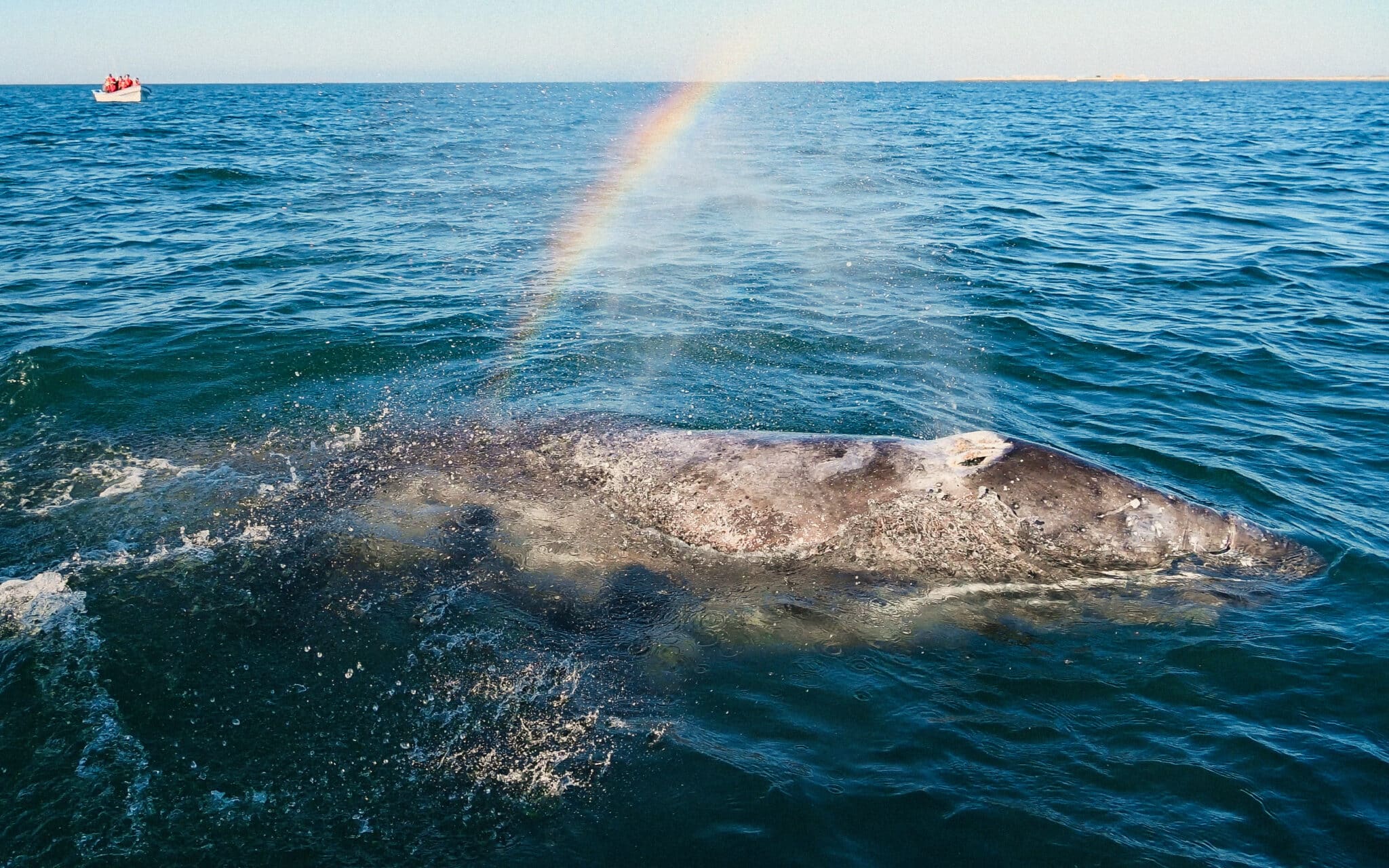
Why Are Gray Whales at San Ignacio Lagoon So Friendly?
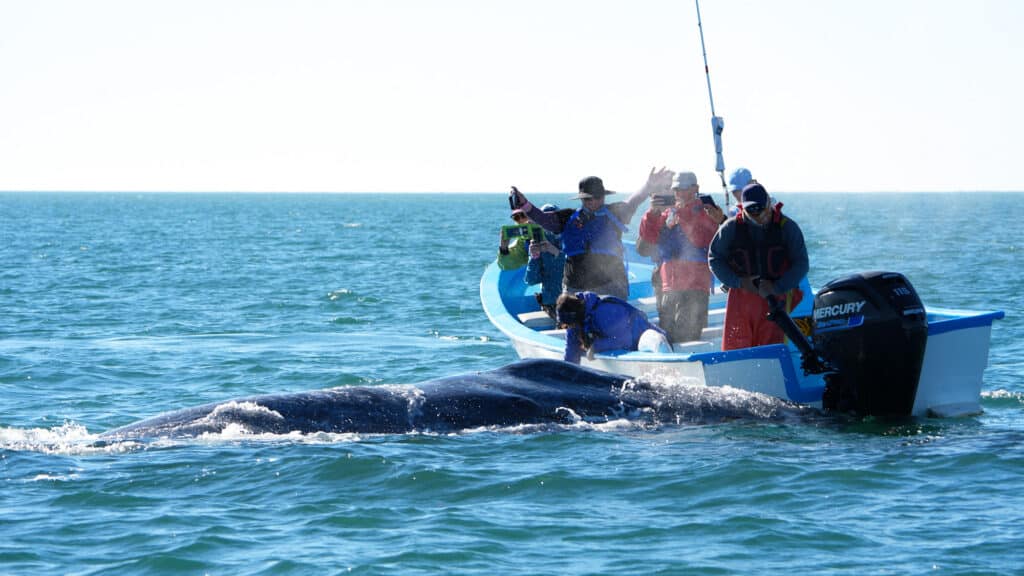
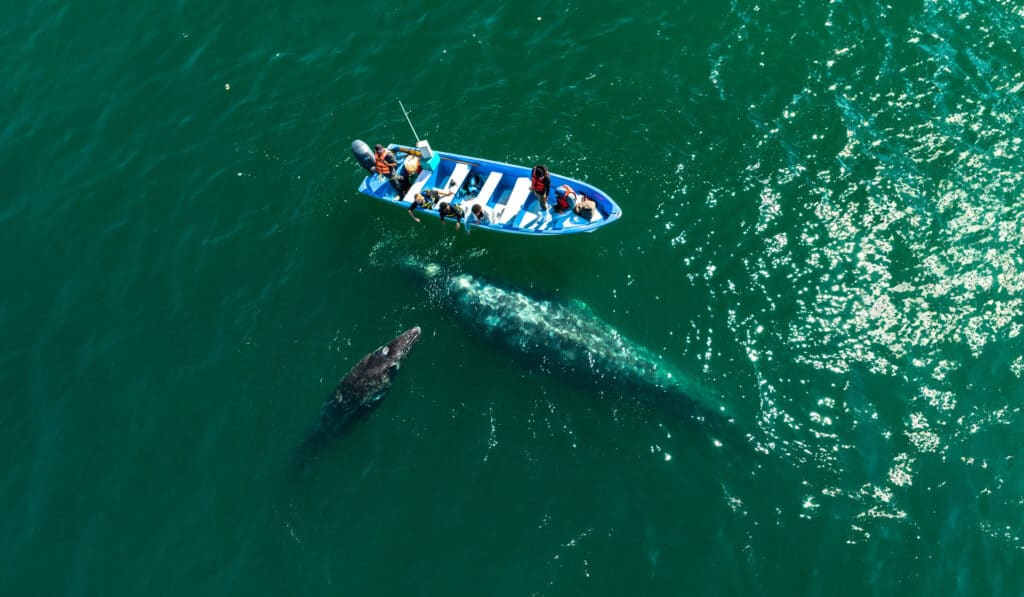
Are gray whales friendly? Generally, wild animals prefer to keep their distance from people; this is not always true of the gray whales in Baja California. In fact, at San Ignacio Lagoon, one could say the answer is a definite ‘yes’. That’s because every winter, gray whales show up here and some do something most wild animals never would: approach a boat full of strangers. Some even nudge alongside for a closer look, or bring their calves over to say hello.
But why do these gentle giants behave this way? It’s a rare phenomenon in the animal kingdom, and although scientists don’t fully agree on why it happens here, a few solid theories help explain it.
What Does “Friendly” Mean in Gray Whale Behavior?
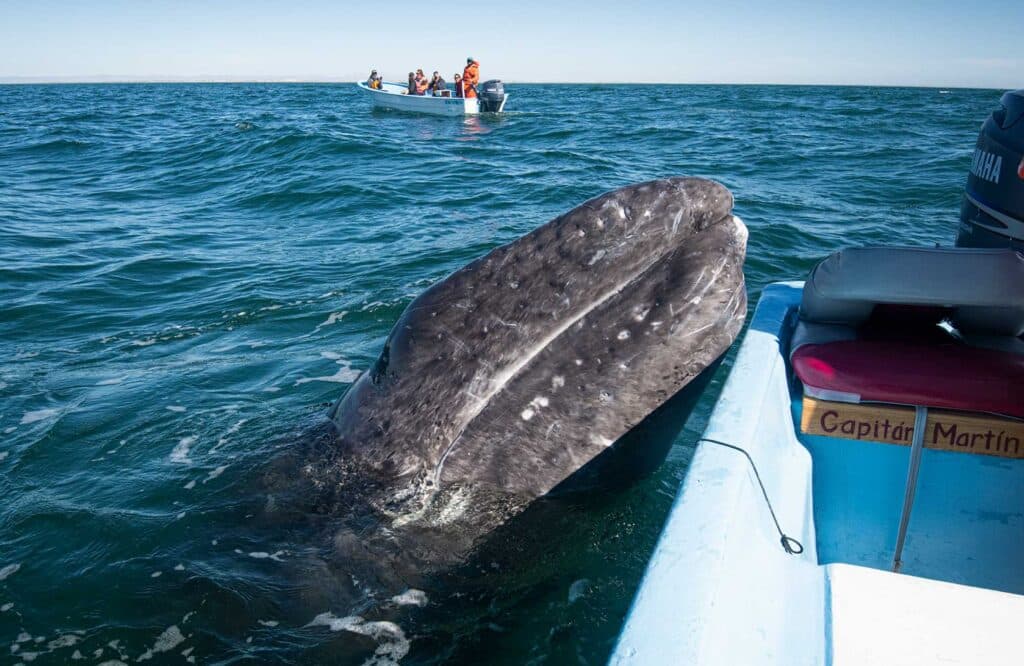
First, let’s clarify what we mean when we describe gray whales as “friendly”. It doesn’t mean they cruise around seeking out belly rubs like a golden retriever. Instead, it refers to specific behaviors that demonstrate curiosity rather than fear. Examples of friendly behavior include lingering near boats, surfacing close enough to touch, and showing no sign of stress or flight. For a 40-ton wild animal, choosing to stick around is the real story here.
How Gray Whales Interact with Humans in the Wild
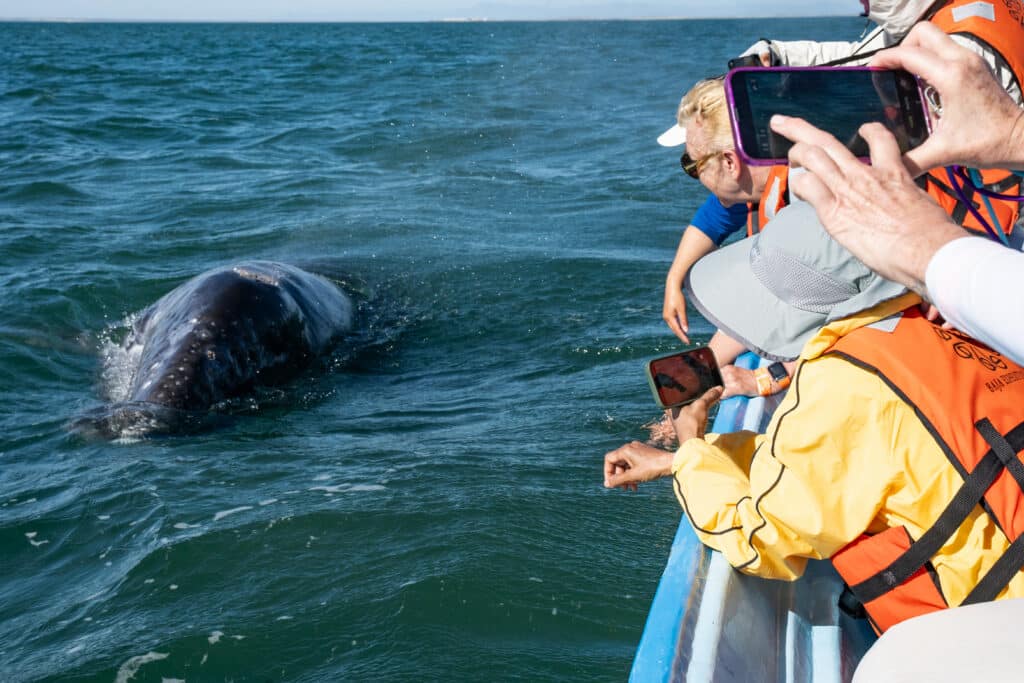
Out in the open ocean, gray whales mostly keep their distance, with sightings often limited to a distant blow or a tail disappearing beneath the surface. Close encounters are almost unheard of. San Ignacio Lagoon is the exception. Here, a whale might glide under a panga and surface right alongside it, or a mother might nudge her calf toward outstretched hands. Some roll onto their sides for a better look at the people leaning over the boat. None of this is guaranteed on any whale watching trip — but when it happens, it’s extraordinary.
Why Are Some Gray Whales “Friendly”?
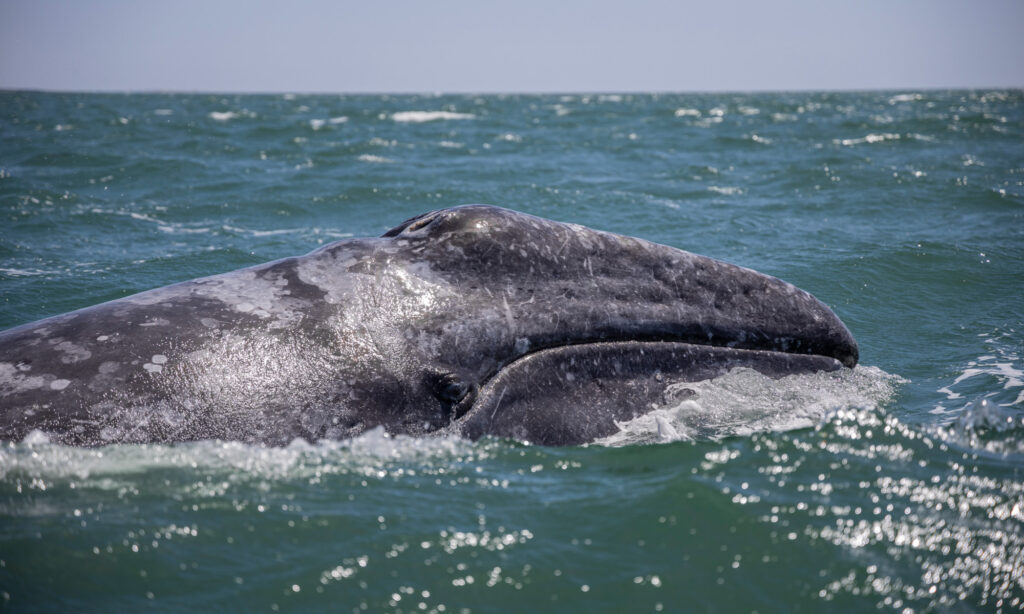
Some of the lagoon’s grays are perceived as friendly: the ones who don’t shy away from boats, who linger near them rather than moving on. It’s fascinating to wonder why. The behavior likely comes down to a mix of safety, curiosity, and — interestingly — sound. Strip away the mystery, and a few practical, well-documented factors start to explain why these whales feel comfortable enough to approach.
Safe, Calm Environments Encourage Close Encounters
Hunting wiped out much of the population here by the late 1800s, leaving today’s lagoon residents with no living memory of being hunted. Formal protection followed decades later — Laguna San Ignacio became a federally protected whale refuge in 19791, and the lagoon now sits within the UNESCO El Vizcaíno Biosphere Reserve, with whale watching done on the whales’ terms rather than the other way around.
Natural Curiosity and Intelligence
Gray whales are smart, social animals, and curiosity seems to be part of their nature. Not every whale here approaches boats — but the ones that do seem to be checking out their visitors as much as we’re checking out them.
The Role of Sound and Social Communication
Whales rely on sound to make sense of their surroundings, and the low hum of a panga engine isn’t far off from the calls whales use with each other. That overlap may be enough to pique their interest and draw them in for a closer listen.
Where Do “Friendly” Gray Whale Encounters Happen Most Often?
So, are gray whales friendly everywhere they go? Not exactly, no. In the wild, open ocean, gray whales usually keep their distance from boats and people. In fact, reports of close encounters are concentrated in just a few spots along Baja’s Pacific coast — primarily the lagoons where gray whales come to breed and calve each winter. Ojo de Liebre (also called Scammon’s Lagoon) and Bahía Magdalena both see their share of gray whales, some of them curious, but one lagoon has built its entire reputation on it.
San Ignacio Lagoon: A Hotspot for Unique Interactions
San Ignacio Lagoon whale watching is more remote, more protected, and less developed than Baja’s other whale nurseries. Tightly regulated boat permits keep traffic light and the lagoon quiet. That combination of fewer boats, calmer waters, and a long-protected population seems to bring out the whales’ curious side more consistently than anywhere else in the region. It’s the reason San Ignacio Lagoon has become almost synonymous with the question “are gray whales friendly” in the first place — for many visitors, it’s the one place they get to find out for themselves.
The Science Behind Gray Whale Behavior
Why do gray whales display “friendly” behavior here? What makes San Ignacio Lagoon special to them? The whales haven’t released an official statement on this just yet… so we don’t have definitive answers. However, the marine biologist experts at Gray Whale Research in Mexico have shared some fascinating theories:
- No fear of humans: Commercial hunting ended here in the late 1870s. With an average lifespan of 50–60 years, today’s whales have never been hunted and have not been conditioned to fear us.
- A safe, calm environment: San Ignacio Lagoon is protected within the El Vizcaíno Biosphere Reserve. It’s generally free of orcas, and whale watching is done respectfully and on their terms, creating a safe haven for them.
- Curiosity about sound: Whales rely on sound to explore their world. The low-frequency hum of panga (local boats) engines resembles their own calls, which may explain why they come closer to investigate.
- Touch as a form of connection: Calves spend their early months rubbing and rolling around with their mothers. Touch is natural to them, so being gently petted by curious humans might actually feel familiar and comforting.2
Not every gray whale shows curiosity, so encountering a “friendly” one is always a special treat. What truly makes San Ignacio unique is the sheer number of whales that gather here. At some places, you might wait all day to catch a glimpse of just one. Amazingly, more than 200 whales were counted in the lagoon in the last season. Some days, you don’t even know where to look because there are whales in multiple directions.
Responsible Whale Watching Etiquette 101
By respecting these simple rules, you can help us protect the whales and their vital mission — to reproduce and raise the next generation.
- Choose expert-led trips: Not all operators offer naturalist-guided tours, but we believe it’s essential. Why? Marine biologists understand whale behaviour and can interpret their movements and group dynamics. Their expertise helps ensure encounters remain safe, respectful, and do not interfere with their mating or calving.
- Giving whales space: Whales approach us on their own terms. There’s never any pressure—whales either swim closer or swim away. In the lagoons, their focus is on mating or nurturing their calves. Waiting patiently allows them to behave naturally while giving us the privilege of witnessing their intimate moments.
- Respect time limits: We schedule up to three whale watching sessions a day (except your arrival and departure days, which are limited to 1–2 sessions). Each session lasts 90 minutes, with breaks in between, giving the whales the space, rest, and privacy they need.
- Avoiding no-observation zones: Whale watching is only permitted in a specific area near the ocean entrance. About two-thirds of the lagoon remains a protected sanctuary, completely free from disturbance.
FAQs
Do gray whales approach boats on purpose?
Surfacing near a boat could be pure chance. But lingering, swimming closer, or coming eye-to-eye with the people on board — that’s the whale choosing to stick around. And that choice is what makes the encounter feel so special.
How big are gray whales?
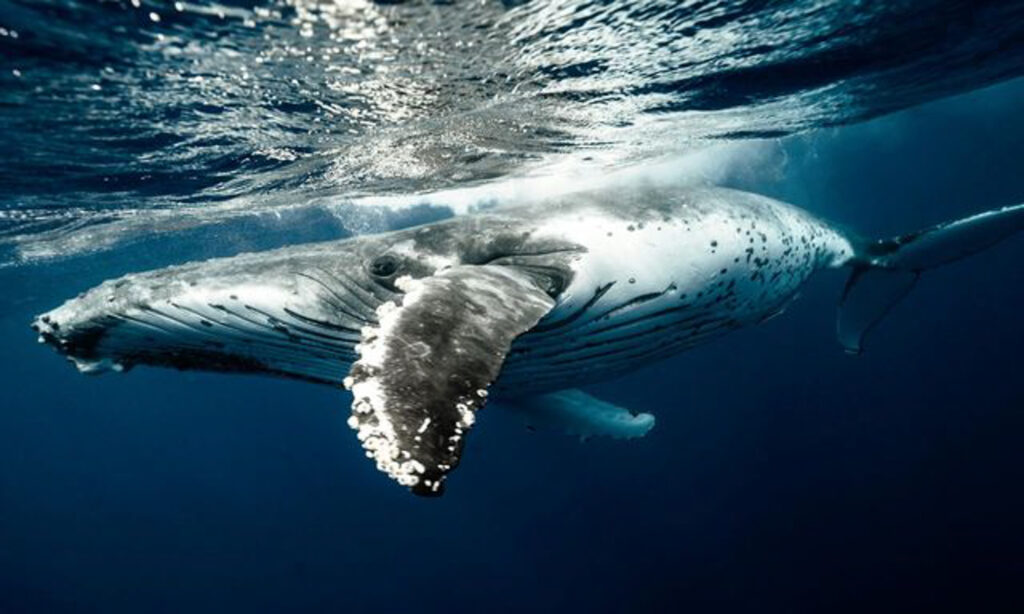
Adult gray whales typically reach 40–50 feet long and can weigh up to 45 tons (roughly the weight of eight African elephants). Curious what else makes them so remarkable? Check out our gray whale facts for more.
Is San Ignacio Lagoon the only place this happens?
It’s the most famous example, but not the only one. Ojo de Liebre and Bahía Magdalena also see occasional friendly encounters — San Ignacio’s reputation comes from how consistently it happens here.
When is the best time to see “friendly” gray whales?
The gray whale season runs roughly from January to April, with peak sightings typically in February and March.
Are all gray whales friendly?
No — curiosity varies whale to whale, just like personality varies in any species. That’s part of what makes a friendly encounter feel so special.
Not sure which trip is right for you?
Our concierges are on standby to help you find the perfect adventure. Whether you choose a 4-day gray whale and glamping experience, an activity-packed combo trip sailing in the Sea of Cortez, or want to add blue whale watching to your itinerary, we can help you plan your ideal trip.
Sources & Further Reading
- UNESCO World Heritage Centre. “Whale Sanctuary of El Vizcaíno.” — UNESCO World Heritage Convention ↩︎
- Castañeda, O. & Swartz, S. L. (2025). “Friendly Whales: Why Do We Need Best Practices for Their Observation?” — Gray Whale Research in Mexico ↩︎
Natural Resources Defense Council. “Saving the Breeding Grounds of the Pacific Gray Whale.” — NRDC
Captain Mike. “Why Do Gray Whales Migrate to Baja Mexico?” — Baja Expeditions

By Baja Expeditions Crew
The Baja Expeditions crew is the heart and soul of every journey. With decades of hands-on experience in marine biology, guiding, and local ecology, our passionate team shares their knowledge and love for Baja California in every blog post.
View Baja Expeditions Crew