
Humpback Whale Facts: Fascinating Facts About Ocean Giants
In this guide to humpback whale facts, we’ll explore what makes these whales so remarkable. You’ll learn about their size, diet, behavior, and famous songs, as well as where they live and migrate throughout the year. Few animals capture the imagination quite like humpback whales.
So, whether you’re a wildlife enthusiast, traveler, or simply curious about ocean life, humpback whales offer endless fascination.
What Is a Humpback Whale?
Let’s start with the basics… what is a humpback whale? A humpback whale (Megaptera novaeangliae) is a species of baleen whale, a group of whales that filter small prey from seawater rather than hunting large animals. Instead of teeth, baleen whales have comb-like plates made of keratin that allow them to strain tiny fish and crustaceans from the ocean.
Humpbacks belong to the family Balaenopteridae, which also includes blue whales, fin whales, and minke whales. However, humpbacks stand apart from their relatives thanks to several distinctive traits: extremely long pectoral fins, knobbly bumps on their heads called tubercles, and their famously complex songs and vocalizations.
Quick Facts About Humpback Whales
Before diving deeper, here are some quick humpback whale facts that highlight just how impressive these marine mammals are:
Basic Humpback Whale Facts: Size, Weight, and Lifespan
Humpback whales are among the largest animals in the ocean. Adults typically grow to around 12–16 meters (40–52 feet) long and can weigh 25–40 tons. Females are usually slightly larger than males. A newborn calf measures about 4–5 meters (13–16 feet) and can weigh close to a ton at birth.
Humpback whales are long-lived animals. Scientists estimate their lifespan can reach 80 to 90 years, although determining the exact age of whales in the wild can be challenging.
Where Do Humpback Whales Live?
Humpback whales are highly migratory and can be found in all major oceans, from the icy waters of Antarctica to warm tropical seas.
Their distribution changes with the seasons. During the summer months, humpbacks typically gather in colder waters where food is abundant. In winter, they migrate to warmer regions for breeding and calving.
What Do Humpback Whales Eat?
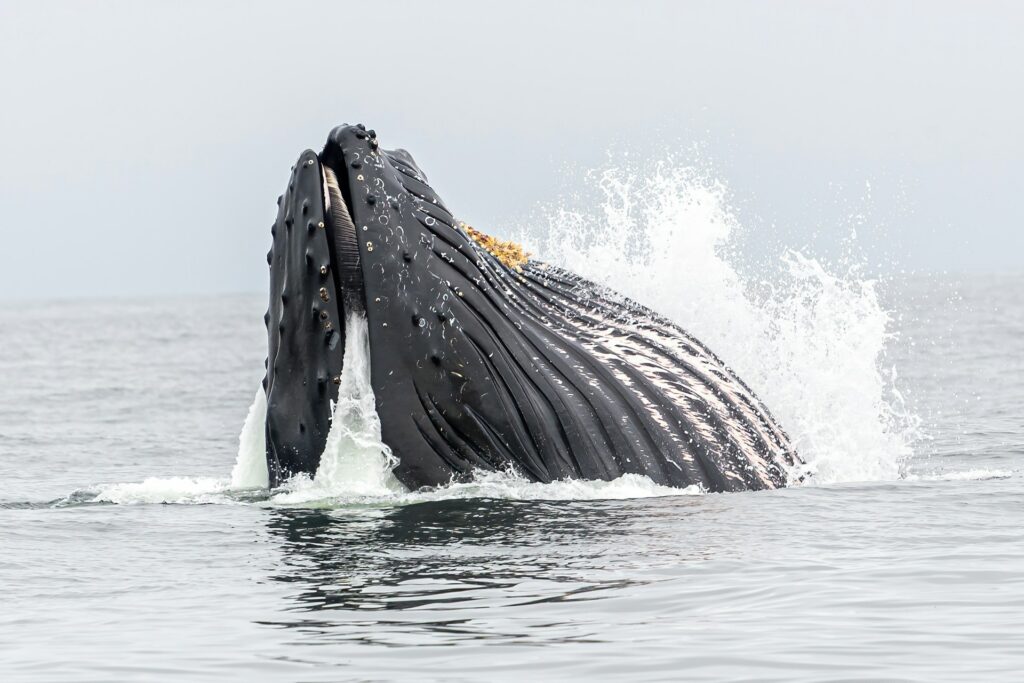
Humpbacks primarily feed on small fish and krill, including herring, anchovies, and other schooling species. They use a feeding technique known as lunge feeding, where they accelerate through dense schools of prey with their mouths open.
One of their most remarkable hunting strategies is bubble-net feeding. In this cooperative technique, groups of whales swim in circles beneath fish schools while blowing bubbles upward. The bubbles form a ring that traps the fish, allowing the whales to surge upward through the concentrated prey.
What Are the Most Interesting Humpback Whale Facts?
Humpback whales are famous for their acrobatics and other behaviors that make them one of the most exciting marine animals to observe in the wild.
Humpback whales’ long migrations
Humpbacks undertake extraordinary seasonal migrations between feeding and breeding grounds. Some populations travel more than 8,000 kilometers (5,000 miles) in a single migration cycle.
For example, whales that feed in the cold waters of Alaska during summer may migrate to Hawaii or Mexico for the winter breeding season. These journeys can take several months and require immense energy reserves.
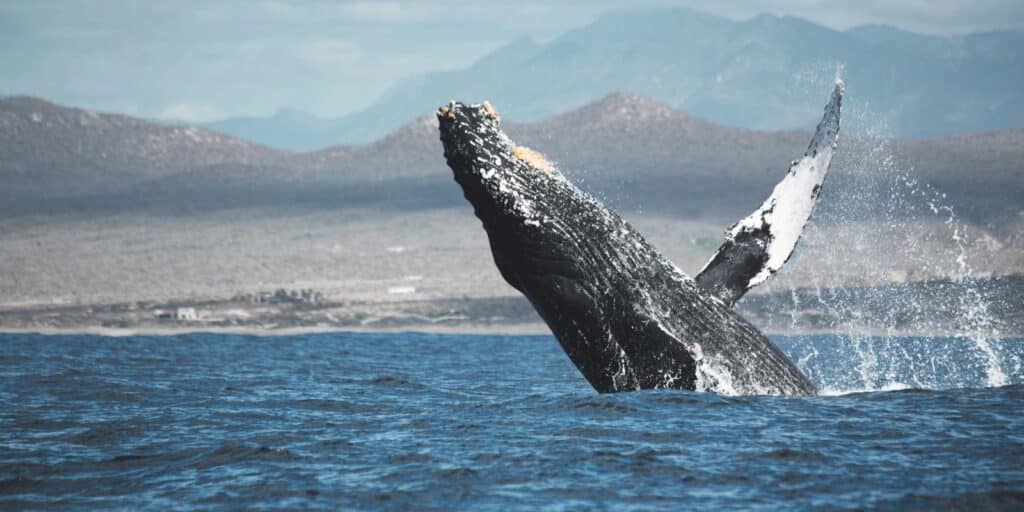
Famous for breaching and acrobatic displays
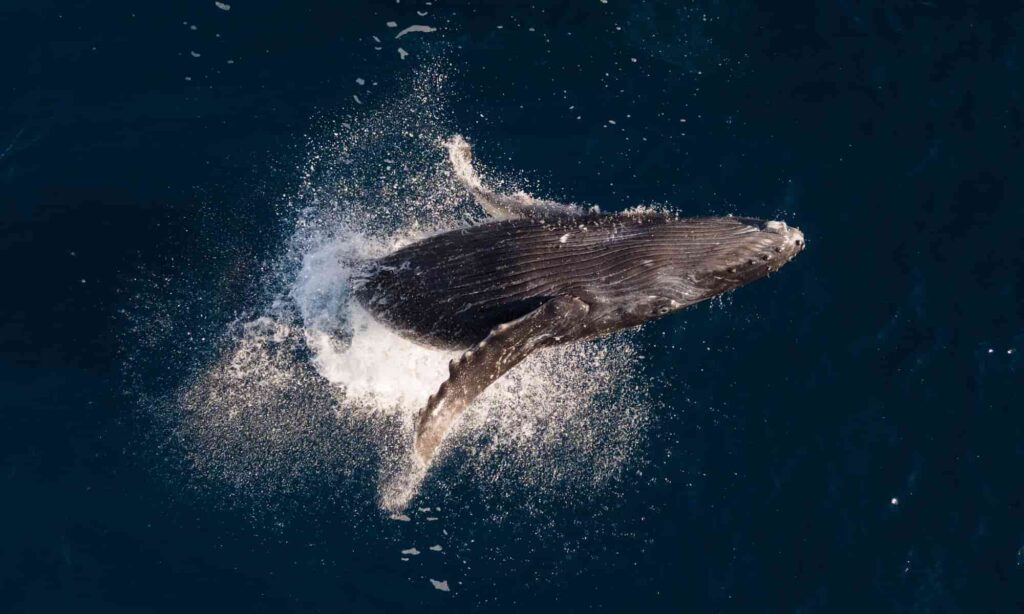
Humpbacks are among the most acrobatic of all whales. They frequently leap out of the water in a behavior known as breaching, where their entire bodies launch into the air before crashing back into the sea.
They also perform other dramatic surface behaviors, including tail slapping, pectoral fin slapping, and spyhopping (raising their heads vertically above the surface). Scientists believe these actions may play roles in communication, parasite removal, or social interaction.
For whale watchers, these displays are some of the most unforgettable sights in the ocean.
Their fins are among the longest in the animal kingdom
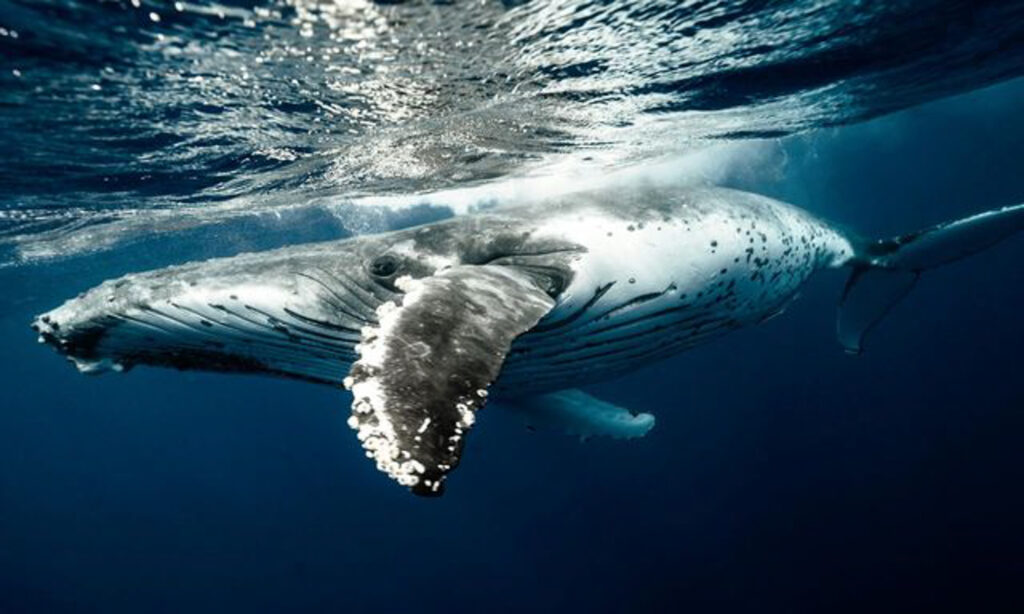
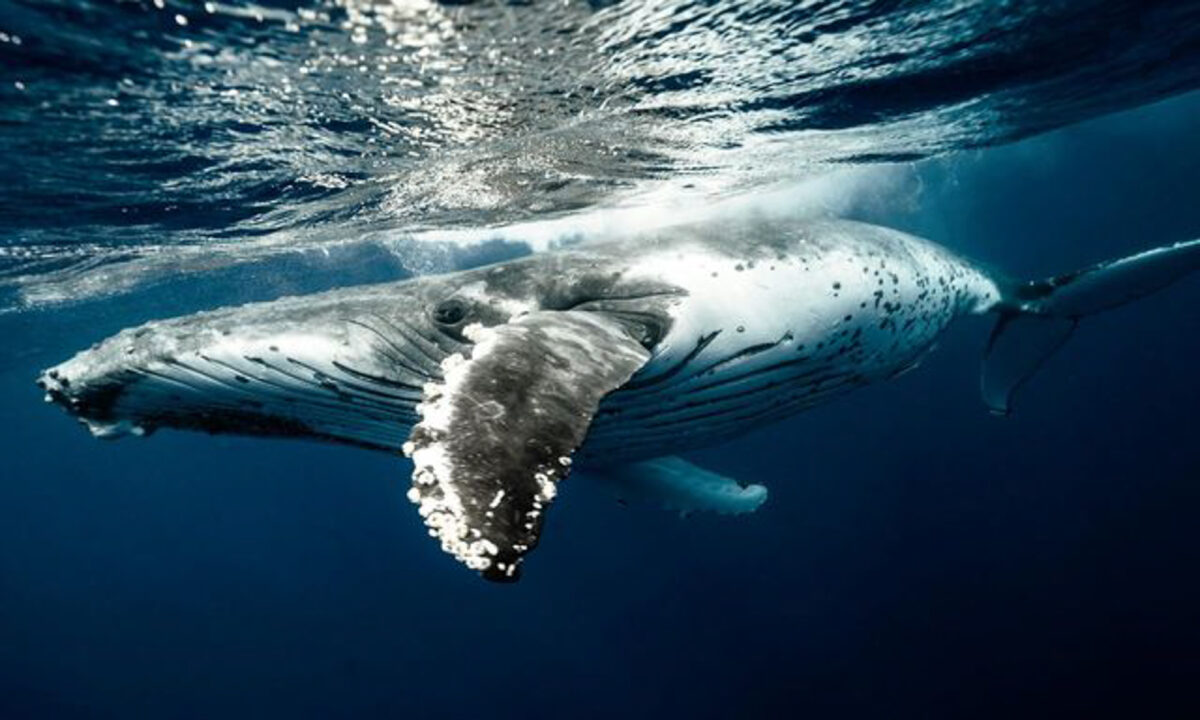
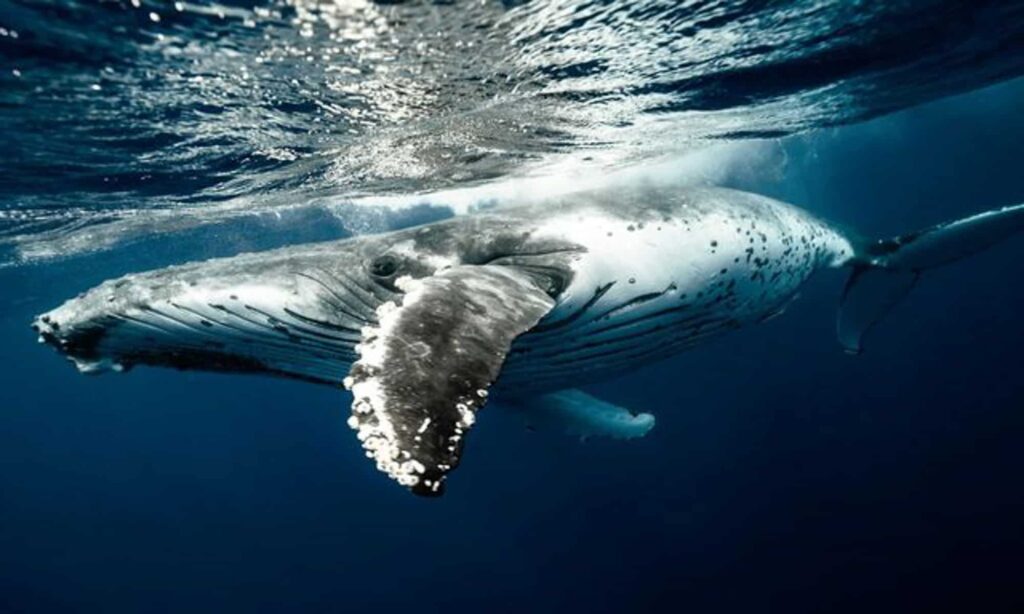
Humpback whales are instantly recognizable by their enormous pectoral fins. They can reach up to one-third of the whale’s total body length, making them the longest appendages of any whale species.
The fins are edged with distinctive bumps called tubercles that help improve maneuverability in the water. This design allows humpbacks to make surprisingly tight turns, which is especially useful during cooperative feeding techniques like bubble-net feeding.
Why Do Humpback Whales Sing?
Perhaps the most famous humpback whale fact is that they sing. Male humpbacks produce long, complex vocal sequences that can last for hours and travel vast distances through the ocean.
The fact is, a humpback whale song is one of the most intricate forms of communication in the animal kingdom.
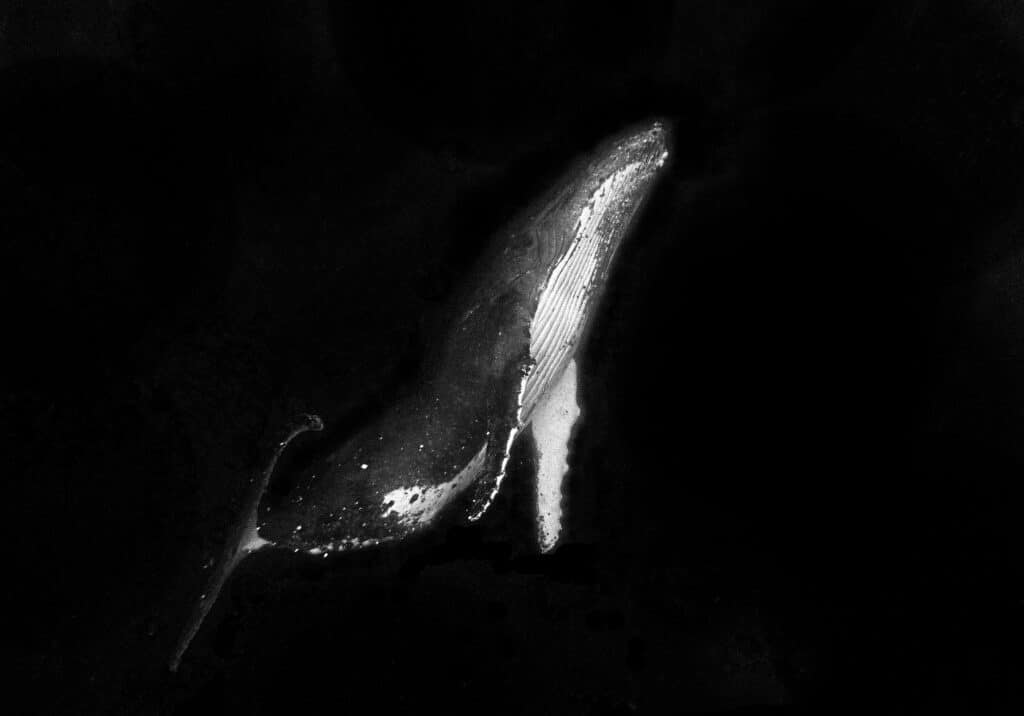
How whale songs are structured
Humpback whale songs are highly complex. They consist of individual sounds called units, which combine into phrases, then themes, and finally into full songs.
A single song may last 10 to 20 minutes, and whales often repeat the same pattern over and over for extended periods. Over time, these songs gradually evolve, with new variations appearing across whale populations. Interestingly, males within the same population typically sing nearly identical songs during a given season.
What scientists believe whale songs are used for
Researchers believe humpback songs are most closely linked to mating behavior. During the breeding season, male whales sing to compete with other males and attract females.
However, the full purpose of these songs remains an active area of scientific study. Some scientists suggest they also serve as a form of long-distance communication, allowing whales to locate one another across vast stretches of ocean.
According to research highlighted by National Geographic, humpback whale songs can travel hundreds of kilometers underwater, which shows how effective sound is as a communication tool in the marine environment.
Facts about Humpback Whales’ Behavior in the Wild?
Despite their immense size, humpback whales are generally peaceful animals that exhibit a wide range of social behaviors.
Mother and calf relationships
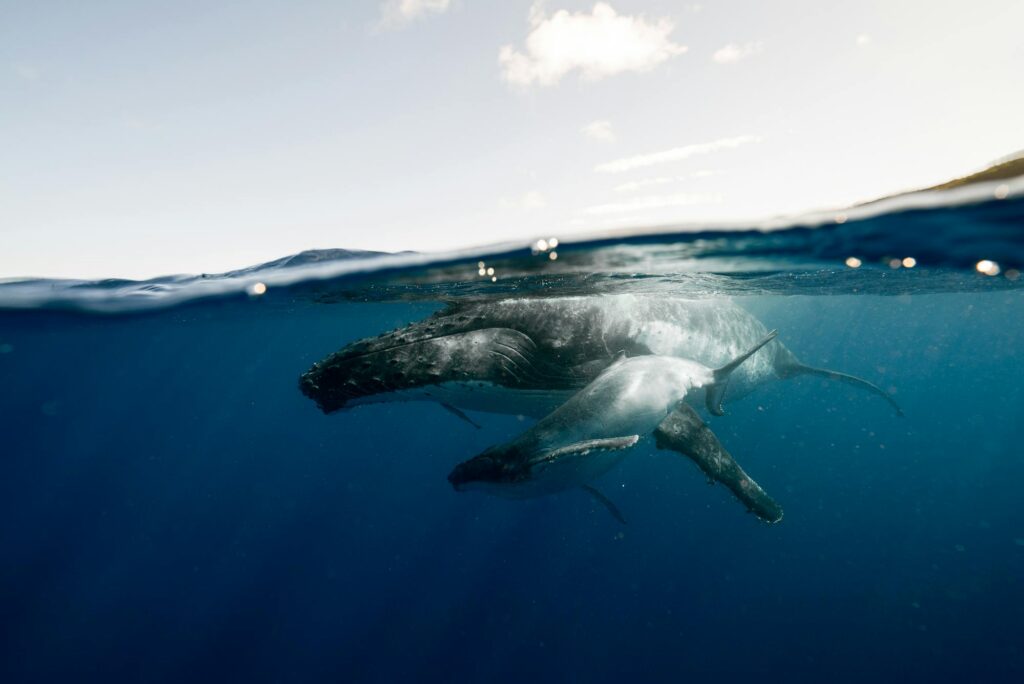
One of the most touching sights in the ocean is a humpback whale mother with her calf. Calves remain close to their mothers during their first year of life, nursing on rich milk that helps them grow quickly. During migration, mothers guide their calves thousands of kilometers to feeding grounds where the young whales begin learning to hunt for themselves.
Social structure and group behavior
Humpback whales are not strictly social animals in the way dolphins are, for example. Most individuals travel alone or in small, temporary groups that form and dissolve over time. However, they often gather in larger numbers in areas where food is plentiful. During feeding seasons, several whales may cooperate in hunting strategies like bubble-net feeding.
Where Do Humpback Whales Live and Migrate?
Humpback whales can be found in every major ocean on Earth. According to the National Oceanic and Atmospheric Administration (NOAA), humpback whales are one of the most successful and widely distributed whale species.
Feeding in cold waters and breeding in warm waters
Most humpback populations follow a seasonal pattern of migration between cold feeding grounds and warm breeding areas.
Cold waters near the poles are rich in plankton and small fish, providing the nutrients whales need to build fat reserves. In contrast, warm tropical waters offer safer environments for calves, with fewer predators and calmer seas.
Major migration routes around the world
Scientists have identified several major humpback migration routes, including:
These migrations are among the most remarkable journeys undertaken by any marine mammal. However, their evolutionary cousins, gray whales in Baja, hold the record for the world’s longest mammal migration.

Are Humpback Whales Endangered?
Humpback whales were once heavily hunted during the commercial whaling era. Fortunately, conservation efforts have helped many populations recover.
Historical threats from whaling
During the 19th and early 20th centuries, humpback whales were hunted extensively. Whale oil was used as an industrial lubricant, to fuel lamps, and even to produce soap. Whale meat was also a crucial food source in some cultures. Baleen was also used to make fashion products such as corsets and umbrellas because it is both rigid and flexible.
Industrial whaling drastically reduced global populations, and by the mid-1900s, many humpback populations had declined to dangerously low numbers.
International protections, including the global moratorium on commercial whaling in 1986, allowed many humpback populations to begin recovering.
Current threats facing humpback whales
Although humpbacks are now considered a conservation success story in many regions, they still face modern challenges, including:
Because of these threats, scientists continue monitoring humpback populations around the world.
Where Can You See Humpback Whales in the Wild?
For wildlife enthusiasts, seeing a humpback whale in the wild is an unforgettable experience.
Best global destinations for humpback whale watching
Some of the most famous places to observe humpback whales include:
- Mexico’s Pacific coast, Cabo San Lucas, and the Sea of Cortez
- Hawaii, Tonga and other South Pacific islands
- Frigid seas around Alaska, Iceland, and Norway
- Australia’s eastern coast
These diverse regions lie along major migration routes, feeding or breeding areas where humpbacks gather seasonally.
Why Baja California is a prime humpback whale destination
The water surrounding Mexico’s Baja California Peninsula is one of the best places in the world to see humpback whales.
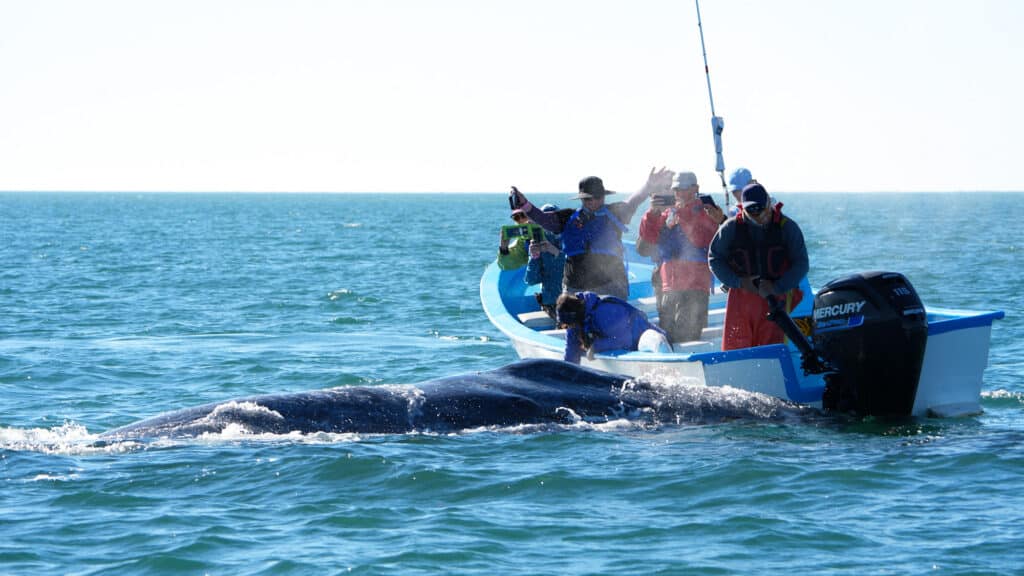
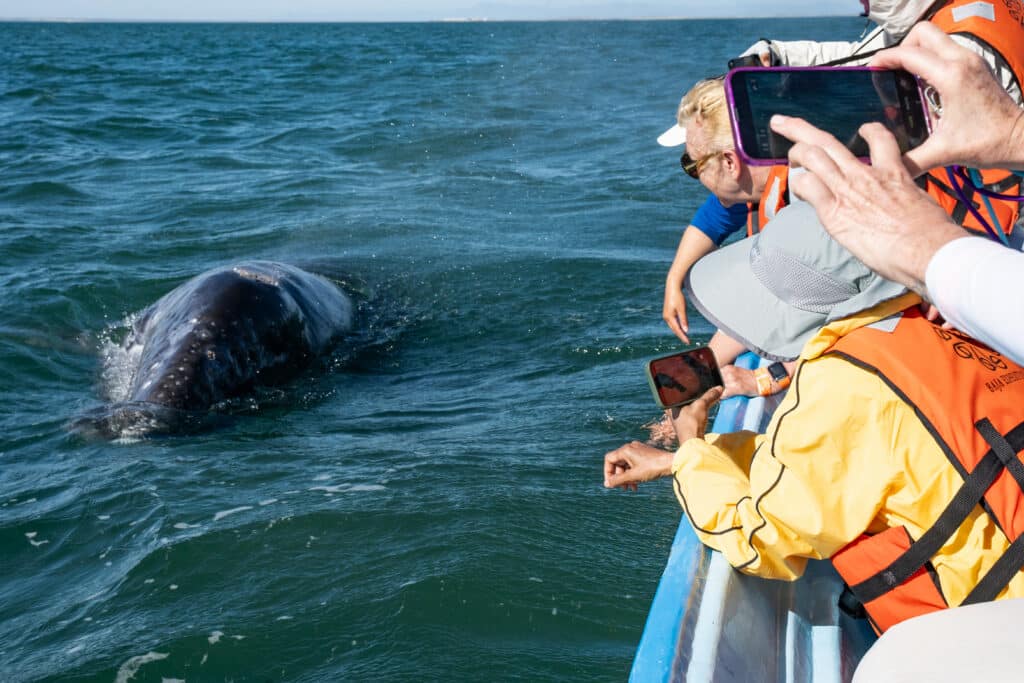
Each winter, whales migrate from their northern feeding grounds to the warm waters of the eastern Pacific. Baja California whale watching tours offer the chance to see humpback whales, blue whales, and other great whale species.
For travelers seeking an intimate connection with these incredible animals, Baja offers a rare opportunity to observe humpback whales in their natural habitat (and without the challenges of exploring the polar seas!). Visitors often witness spectacular behaviors such as breaching, tail slapping, and mothers swimming with newborn calves.
What Are Some Surprising Humpback Whale Facts?
To wrap up, here are a few more fascinating humpback whale facts:
Each humpback whale’s tail fluke pattern is unique, just like human fingerprints, they allow researchers to identify individuals.
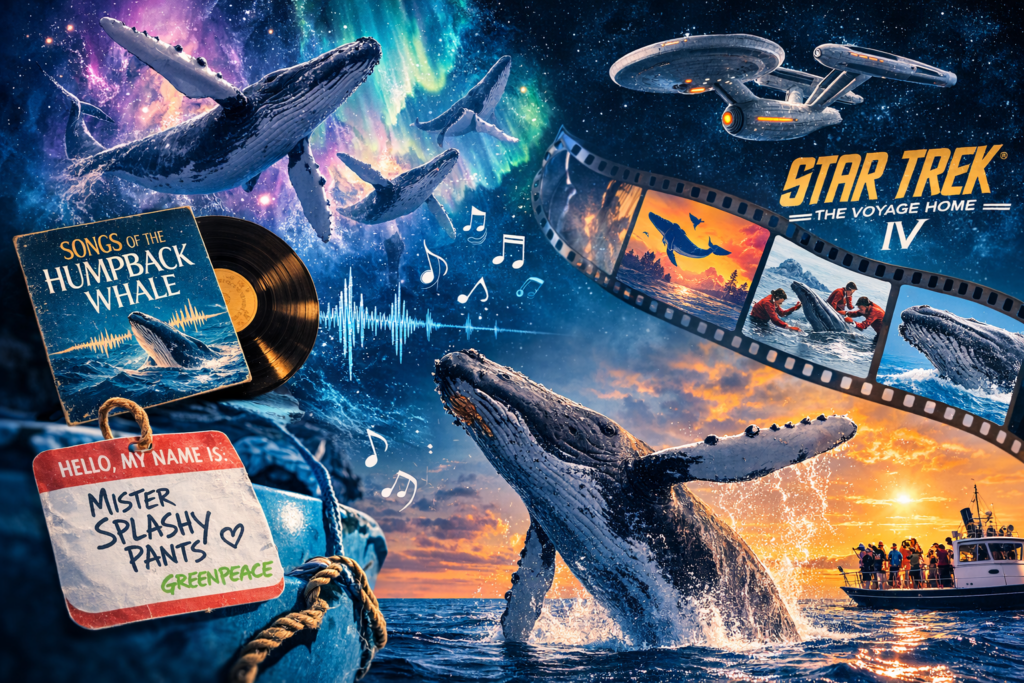
Humpback whales have inspired art, film, and storytelling. In Disney’s Fantasia 2000, a sequence set to Ottorino Respighi’s Pines of Rome features humpbacks soaring through the night sky.
They also appear in science fiction. In Star Trek IV: The Voyage Home, the crew travels back in time to rescue two humpback whales whose songs may be the key to communicating with an alien probe.
They can produce sounds reaching over 180 decibels, among the loudest in the animal kingdom. The “Songs of the Humpback Whale’ record, released in the 1970s, became unexpectedly popular and helped spark widespread fascination with whales, contributing to growing support for whale conservation.
Even internet culture embraced humpbacks. During an online conservation campaign by Greenpeace, thousands of people voted to name a tagged whale “Mister Splashy Pants,” turning it into one of the most famous whale nicknames online.
From their epic migrations and haunting songs to their graceful movements, humpback whales continue to captivate scientists, photographers, and ocean lovers alike — and learning more about them is one of the best ways to deepen our appreciation for the ocean they call home.
Facts About Humpback Whales: Sources & Related Reading

By Baja Expeditions Crew
The Baja Expeditions crew is the heart and soul of every journey. With decades of hands-on experience in marine biology, guiding, and local ecology, our passionate team shares their knowledge and love for Baja California in every blog post.
View Baja Expeditions Crew